
Gently poached eggs in a flavorful tomato sauce make this recipe for Shakshuka one that you'll want to make again and again. It's perfect for breakfast, brunch, lunch, or even a light dinner.
After many requests from my Jewish Cooking Facebook Group, I created this shakshuka recipe featuring a flavorful sauce seasoned with cumin, smoked paprika, and a touch of harissa. Feel free to adjust the spices to suit your taste. I tested the recipe multiple times to get the balance just right to ensure a well-spiced sauce and perfectly cooked eggs. I like mine a little runny, but if you prefer firmer eggs, cook a few minutes longer.
Shakshuka originated in North Africa (Tunisia and Libya). Jews who came from those countries brought the dish with them to Israel. According to chef Anat Edinoy and cookbook author Janna Gur in the cookbook Shuk, this popular Israeli and Middle Eastern breakfast was first featured at a restaurant in Jaffa, Israel called Dr Shakshuka. Shakshuka originated as a humble dish, and now has made its way onto the menus of cafes and upscale restaurants, not only in Israel and across the Middle East but also in the United States.
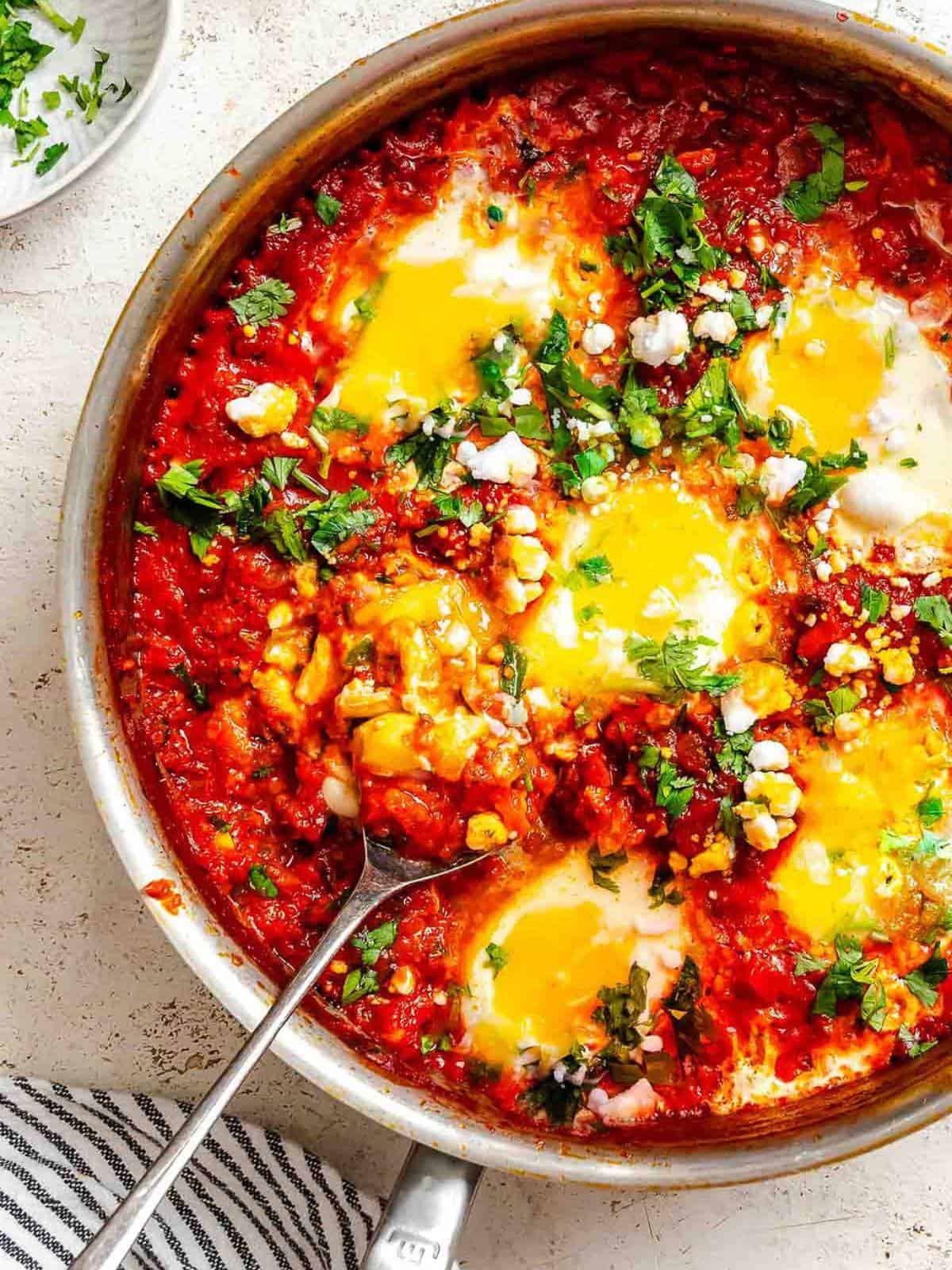
Savory shakshuka is a quick and healthy meal that you can modify to suit your tastes and the ingredients you have on hand. I like to serve shakshuka with avocado slices or a bowl of fruit on the side.
If you're looking for other hearty breakfast or brunch options, this Blintz Souffle Casserole is always a big hit, as is this Matzo Brei or Italian Frittata with Zucchini and Tomato.
Jump to:
Shakshuka Ingredients and Substitutions
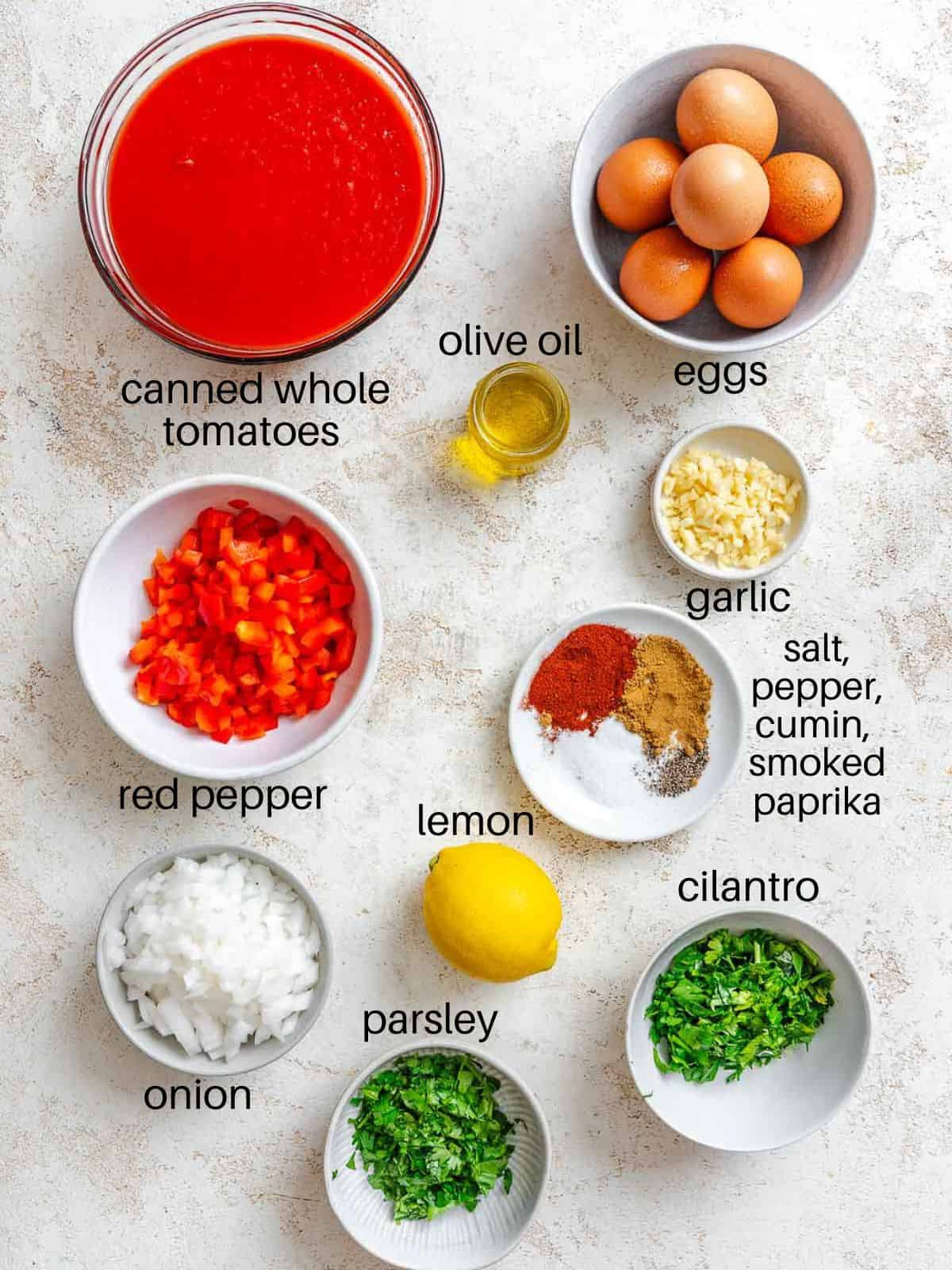
See the recipe card below for a complete ingredient list and measurements.
- Red bell pepper: The distinct flavor of red bell pepper is very important to the dish.
- Smoked paprika: Smoked paprika adds a slight hint of smokiness to the tomato sauce, but you can substitute with sweet paprika.
- Cumin: Adds wonderful traditional flavor to the dish. However, for a Passover-friendly version of the dish (if you don’t eat seeds on Passover), skip the cumin or substitute with half the amount of turmeric or coriander.
- Canned tomatoes: To get the best quality and flavor, use canned whole peeled tomatoes. Generally, the best tomatoes are left whole, and the lesser quality ones are used for crushed and diced. So, start with whole tomatoes and crush them yourself. Use a potato masher or stick blender. Don’t use diced tomatoes; the chunks are too big for this dish.
- Lemon juice: Most other recipes don’t use lemon juice, but I find it gives the eggs a brightness and an acidity that is different from the acid in the tomatoes.
- Herbs: Fresh cilantro and parsley add a vibrant burst of fresh flavor.
- Sugar: This is optional, but may be helpful if your tomatoes are slightly bitter.
- Feta: Also an option, but highly recommended as it gets a little melty, which makes the dish extra delicious.
- Harissa paste: This is an optional ingredient, but I recommend using it if you want the most authentic flavor and like a little heat. Or substitute with a sprinkle of cayenne pepper.
- Other ingredients include: Extra virgin olive oil, yellow onion, garlic, kosher salt, black pepper, and eggs.
- To serve: use pita, crusty bread, or challah for dipping in the sauce. Use matzo on Passover.
Variations
- Shakshuka is a wonderful canvas for using up extra vegetables and ingredients that you have in the house. Other ingredients can be added to the tomato sauce, including roasted eggplant cubes, cauliflower, cooked diced potatoes, spinach, Swiss chard, beans, and lentils. You can even add ground beef or sausage to the sauce.
- Although shakshuka is usually made with poached eggs, some people like to stir each egg vigorously in place (with a fork or chopstick) so the egg turns out creamy and more like a scrambled egg.
- Though not as traditional, some recipes for shakshuka use greens as a base instead of tomatoes. You can saute leeks, spinach, Swiss chard, or kale as a base for the eggs.
How to Use Fresh Tomatoes
- If you can find fresh heirloom tomatoes during tomato season, use 2 to 2.5 pounds (about 6 medium tomatoes), dice them, keep the seeds and skin, and cook for 15-20 minutes over medium-low heat, then mash them with the back of a wooden spoon.
- Use in place of the canned tomatoes.
In A Hurry? Make Shortcut Shakshuka
- Instead of making a tomato sauce from scratch, use a flavorful jarred marinara sauce instead. Although the flavorful profile isn’t traditional, it’s still really tasty.
This recipe has not been tested with substitutions or variations. If you replace or add any ingredients, please let us know how it turned out in the comments below.
How to Make Shakshuka: Step by Step
See the recipe card below for complete directions.
Use these process shots for visual cues for desired texture and recommended size and shape of cut vegetables.

Step 1: Sauté the chopped vegetables in olive oil.
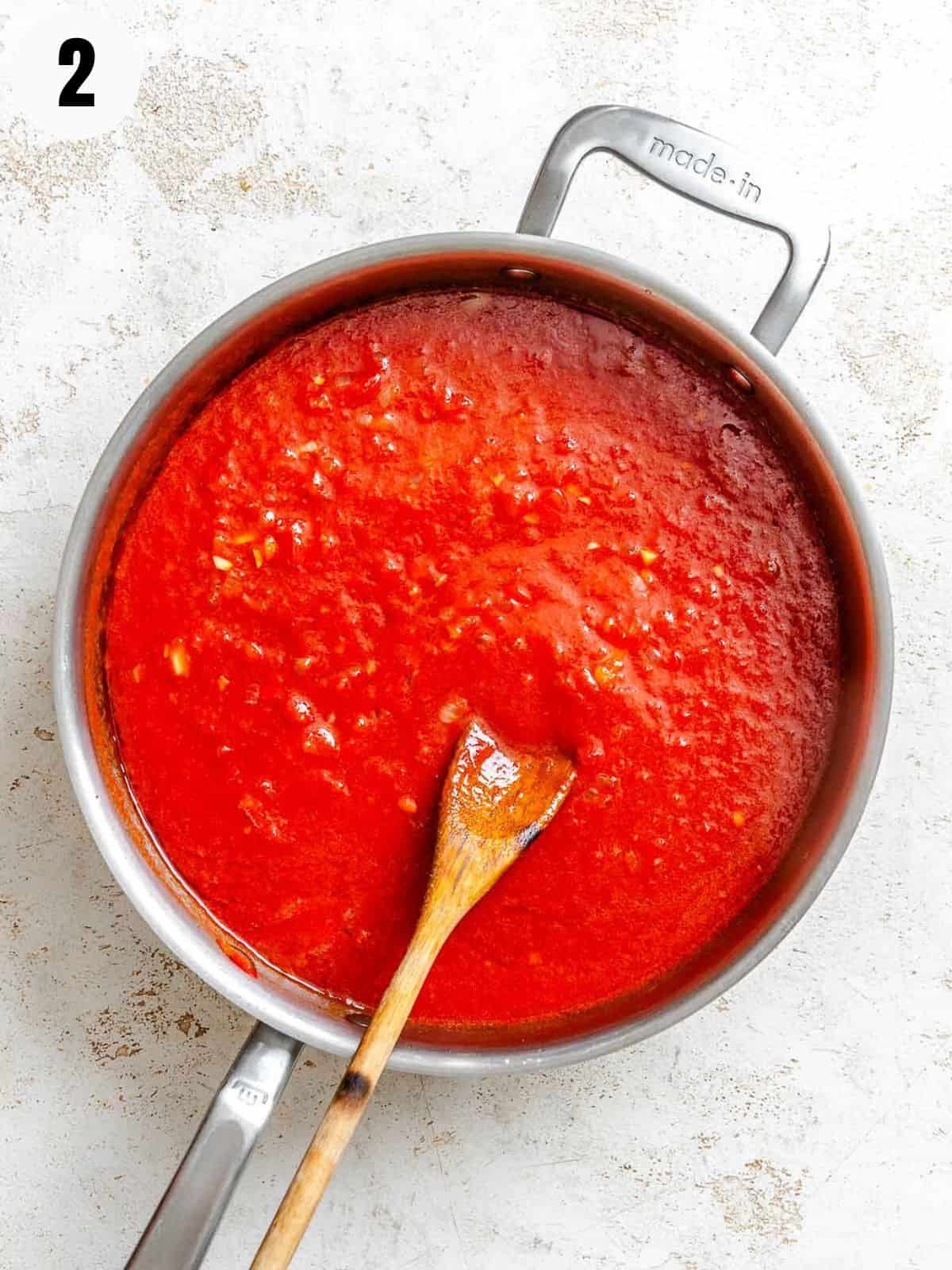
Step 2: Add the tomatoes and spices, and simmer until sauce thickens and darkens.
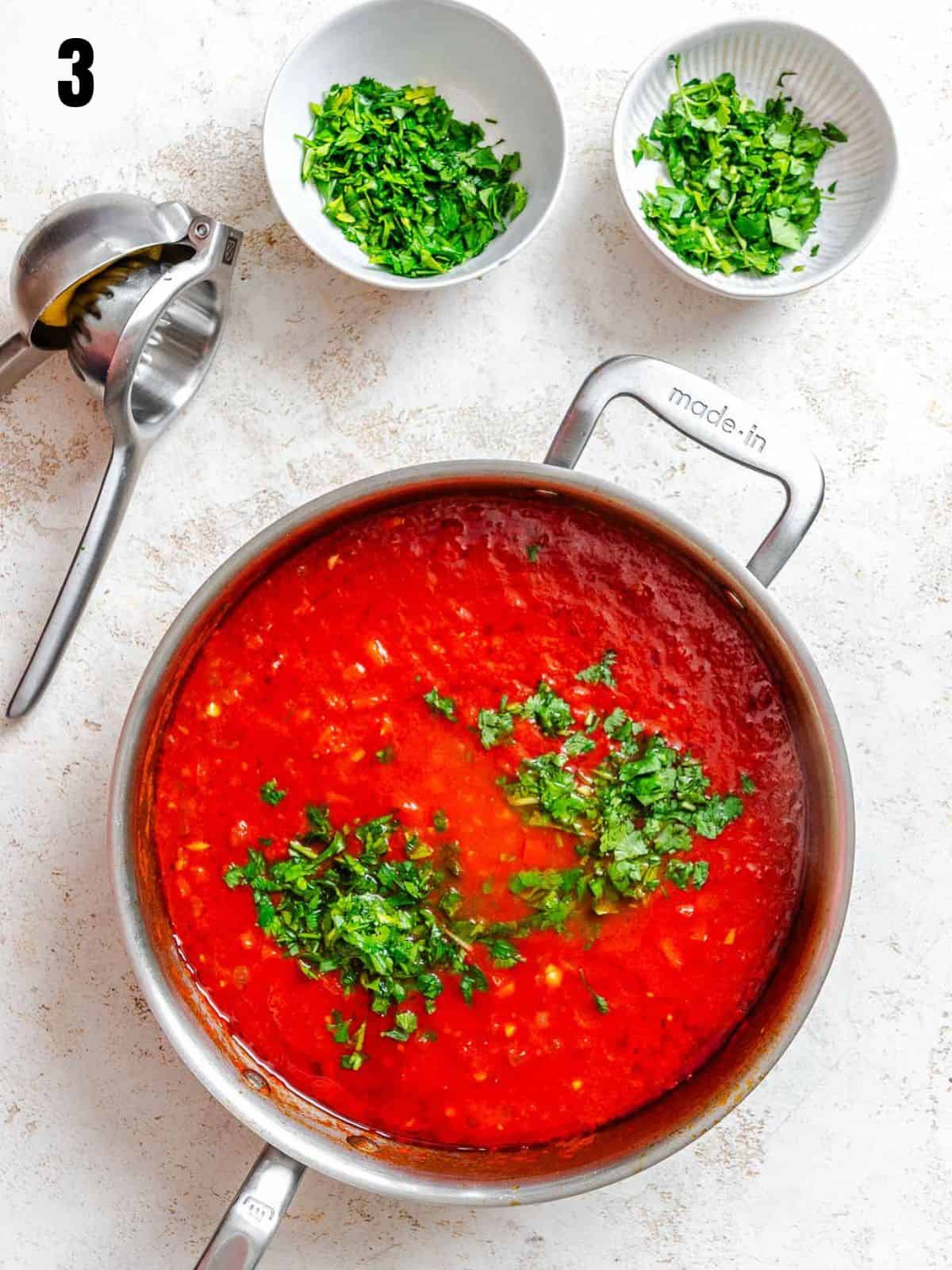
Step 3: Add half the herbs, lemon juice, salt, and pepper. Taste and adjust seasonings.
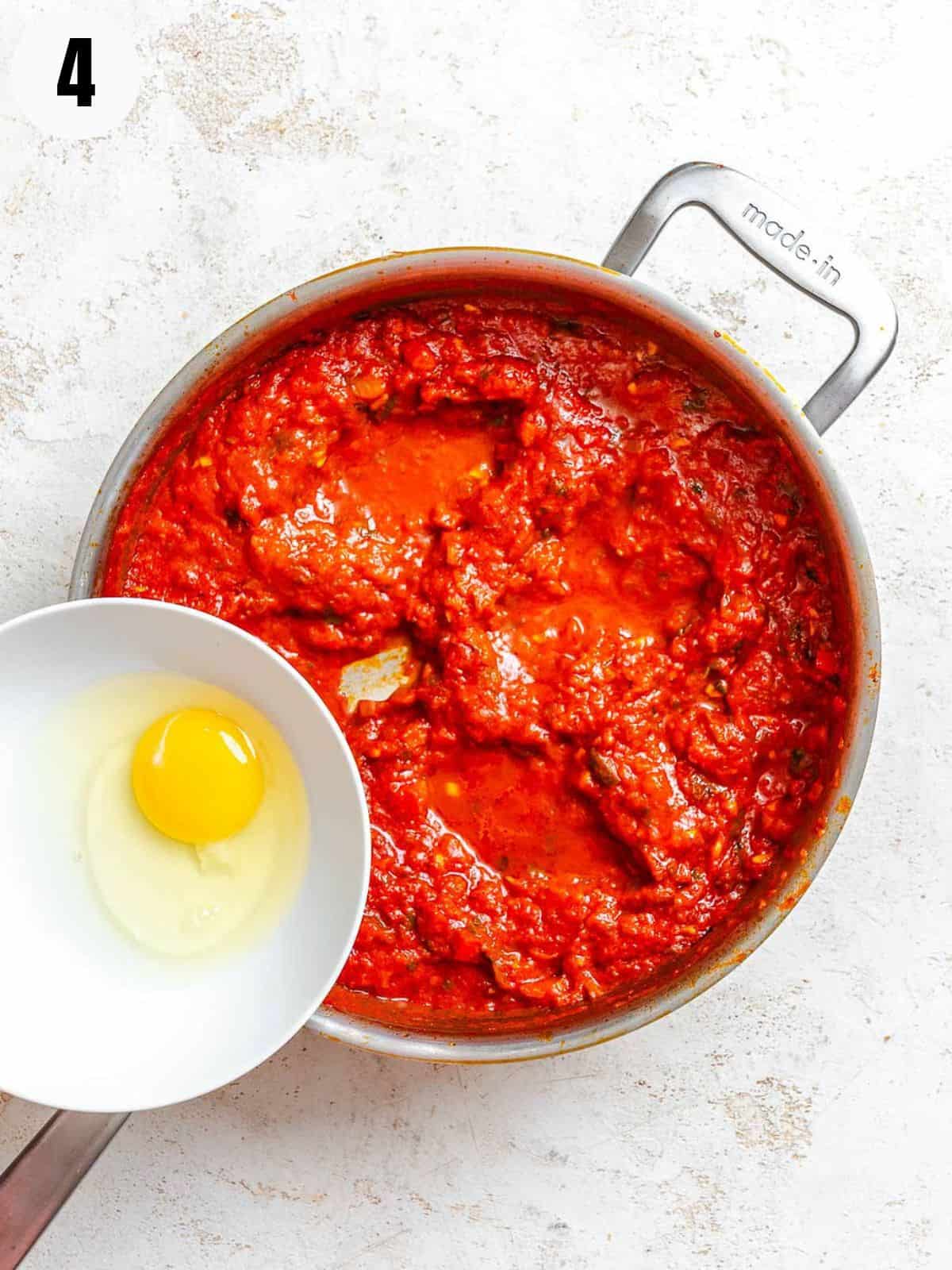
Step 4. Make wells in the tomato sauce for the eggs. Add eggs one at a time from a bowl.
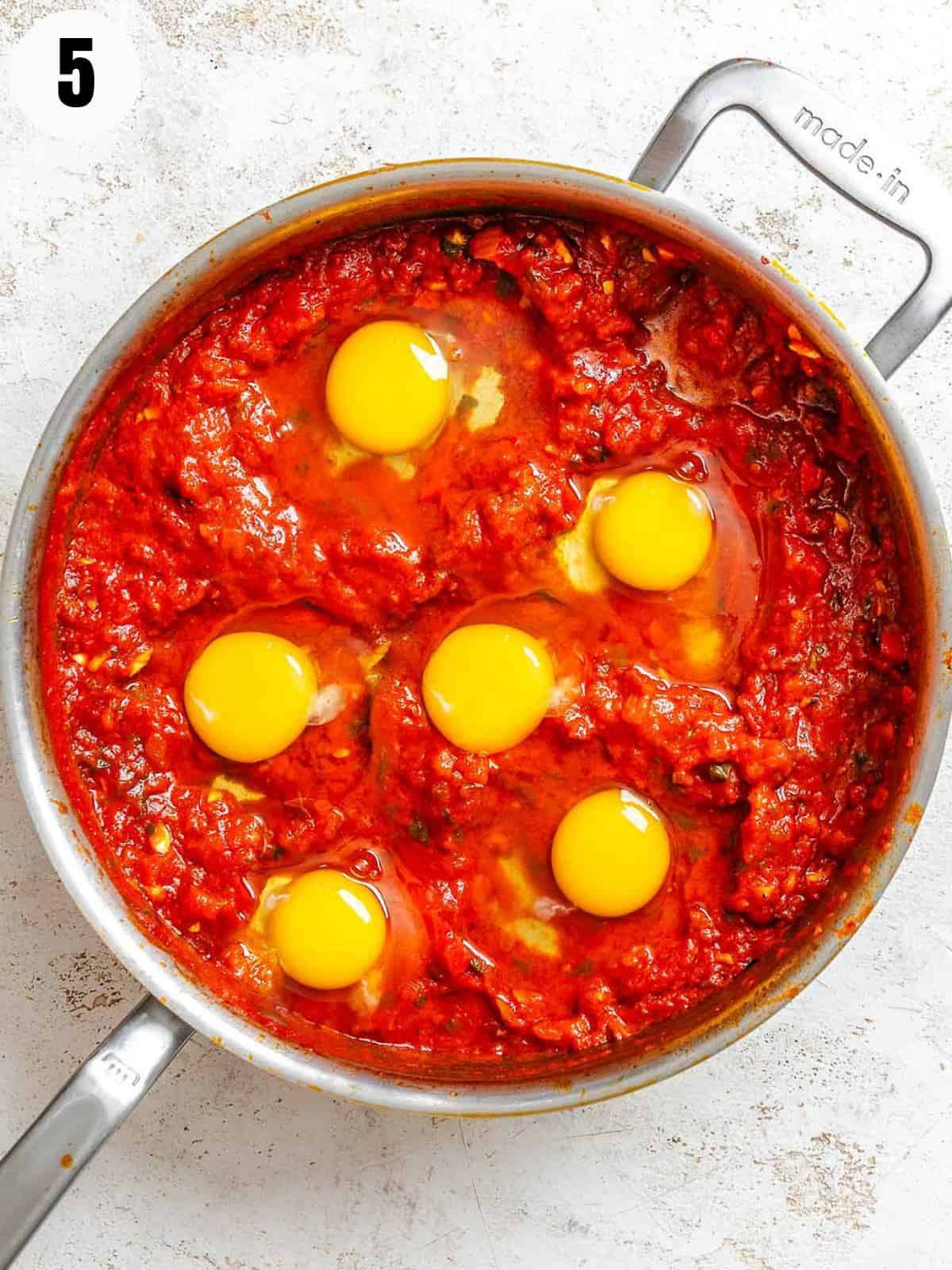
Step 5. Cover and cook eggs in the tomato sauce at a simmer.

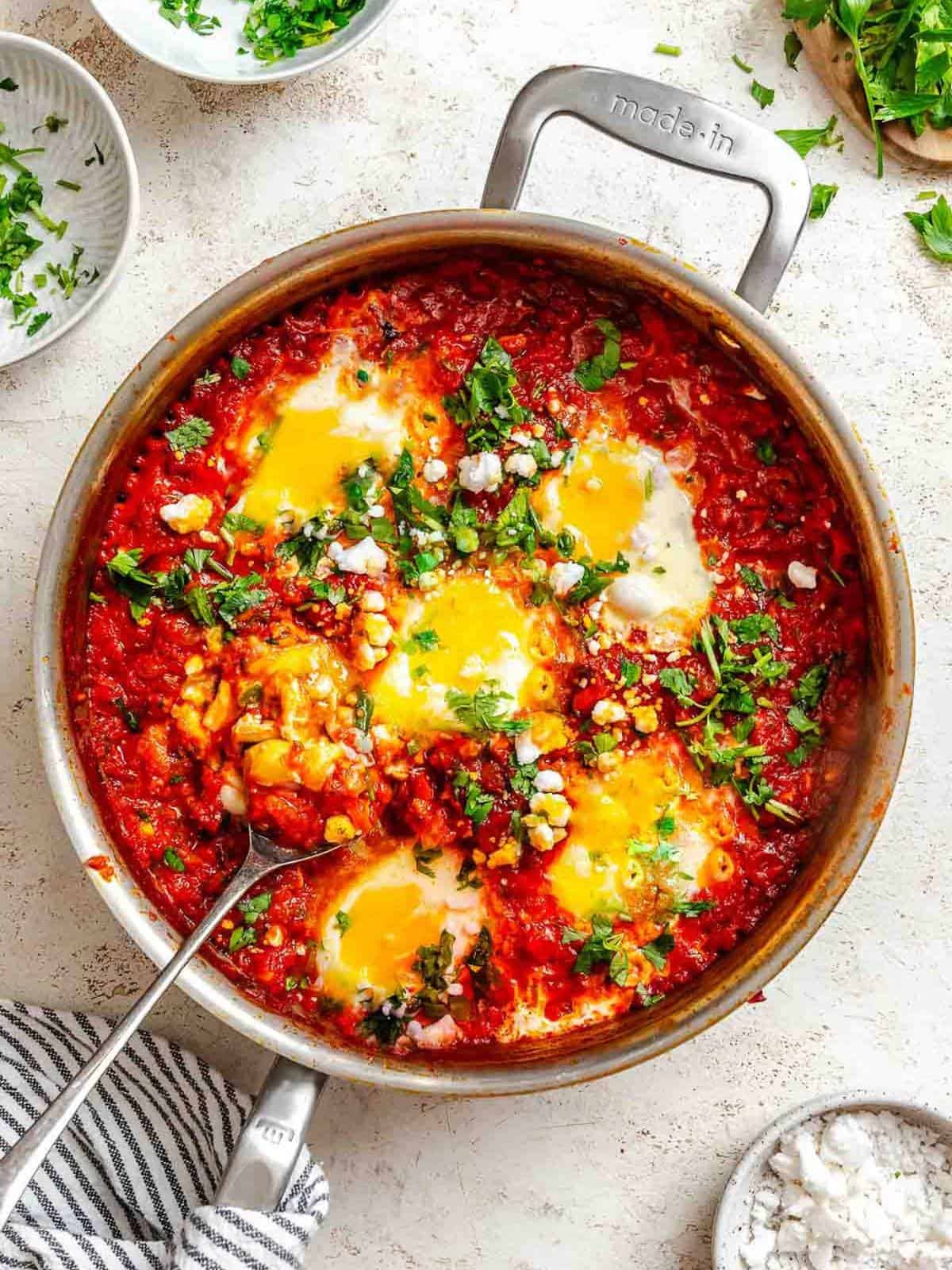
Step 6. Eggs are done when whites are fully cooked and yolks are runny. Then garnish with remaining herbs and optional feta.
Top Tips
- Do not cook shakshuka in a cast iron pan as the iron will likely interact with the acidic tomatoes and impart a metallic taste to the food.
- Use a sauté pan with a lid.
- Adjust the salt and pepper to taste before adding the eggs because the sauce can’t be stirred once the eggs are in.
- Don't crack the eggs directly into the sauce; it's hot and could splash you. Using a bowl also allows you to check for shells.
- Spoon a little bit of the sauce over the cooking egg whites so that they cook a little faster. This helps with timing so that the whites are done while the yolks remain runny.
- Don’t rush: resist the urge to add the eggs to the sauce before it simmers and the flavors of the sauce have a chance to develop.
Equipment
I do not recommend using a cast iron pan. I have cooked shakshuka in a cast-iron before, and I did not like the taste. It was very metallic and odd.
I used a stainless steel 3.5-Quart Sauté Pan with a lid. Use a 10 to 11” pan. A sauté pan has straight sides that are usually higher than a skillet. A ceramic-coated Dutch oven would work too.
Make Ahead and Storage
Make ahead: The sauce can be made ahead and stored in the refrigerator. When ready to make the dish, reheat the sauce to a low simmer before adding the eggs.
How to Store: Leftover or extra sauce can be saved in the freezer and used to make shakshuka another time. Or, try the leftover sauce on pasta- it’s really tasty.
Leftover cooked shakshuka can be kept covered in the refrigerator for 1-2 days.
How to reheat: Reheat over medium-low heat, add a little water if the sauce thickens too much.
More Israeli and Middle Eastern recipes
In the mood for more Middle Eastern spices and flavors, then try one of these fabulous recipes:
- Matbucha: Moroccan tomato and red pepper sauce
- Kousa Mahshi (Stuffed Zucchini with meat and rice)
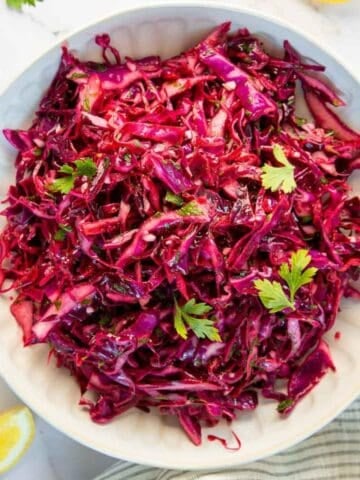
- Red Cabbage Slaw (no mayo)
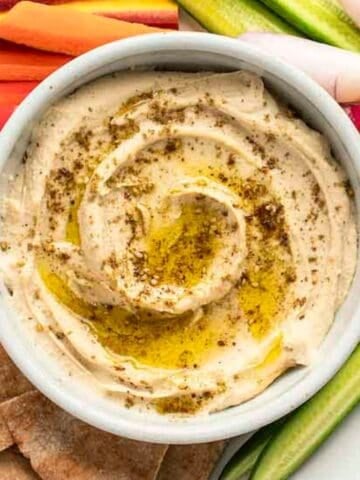
- Homemade Hummus (Smooth and Creamy)

Frequently Asked Questions
Eggs in Purgatory is an Italian version of shakshuka which has Italian herbs like basil and parsley along with garlic and Parmesan cheese.
To make shakshuka for one person, divide the quantities in this recipe by 3.
The whites should be opaque, and the yolks should be a thick runny consistency.
Linger at Dana's Table a little longer for more free recipes.
Subscribe to my newsletter, and follow along on Facebook, Instagram, and Pinterest for the latest updates.
Recipe

Shakshuka (poached eggs in spicy tomato sauce)
Ingredients
- 2 tablespoons extra virgin olive oil
- 1 Medium yellow onion diced
- 1 medium red bell pepper cored, seeded, finely diced
- 4 cloves garlic minced
- 1 teaspoon smoked paprika
- 1 teaspoon ground cumin can omit or substitute on Passover
- ½ teaspoon harissa paste or ⅛ teaspoon cayenne pepper, optional
- 28 ounce can whole peeled tomatoes crushed before adding. Or buy canned crushed tomatoes
- 1 tablespoon lemon juice from about a ½ lemon
- ¼ cup cilantro chopped and divided
- ¼ cup parsley chopped and divided
- 1 teaspoon Diamond Crystal kosher salt
- ¼ tablespoon black pepper
- 6 eggs
- ¼ cup feta optional
Instructions
- Cook vegetables: Heat oil for 1 minute over medium heat in a large, deep-sided saute pan with a lid (I used a 3.5-Quart Sauté Pan). Add onion and bell pepper, and saute, stirring occasionally, for 5-7 minutes or until the onions are translucent and soft. Add garlic, and saute for 1 minute.
- Add tomatoes and spices: Add the tomatoes and their juices, smoked paprika, cumin, and harissa paste (if using) to the pan. Stir well to combine. Increase the heat to bring to a boil, and then lower to maintain a simmer. Cook for 15-20 minutes uncovered and stirring occasionally until the tomatoes soften, and the sauce thickens a bit and turns a darker shade of red.
- Add seasoning: Add the lemon juice, half the cilantro, half the parsley, salt, and pepper. Mix well. Taste, and adjust seasoning as needed. Note that once the eggs are added, the tomato mixture cannot be adjusted or stirred.
- Add eggs: Maintain the mixture at a low simmer. Use the back of a large spoon to make wells in the sauce for each egg. Gently add one egg at a time by first cracking the egg into a small bowl and then slowly slipping it into the well. Repeat with the remaining eggs.
- Cook eggs: Cover with the lid on until the whites are fully cooked. About 5-7 minutes depending how runny you like the yolks.
- Garnish: Top with remaining cilantro and parsley. If using, sprinkle the feta cheese.
- Serve: Serve immediately, as eggs will continue to cook. Serve with bread or matzo during Passover.
Notes
- Adjust the salt and pepper to taste before adding the eggs so they don't break.
- Don't crack the eggs directly into the sauce; it's hot and could splash you. This also allows you to check for shells.
- Spoon a little bit of the sauce over the cooking egg whites so they cook a little faster. This also helps the yolks to remain runny.
- Resist the urge to add the eggs to the sauce before it simmers and the flavors develop.
- Do not cook shakshuka in a cast iron pan as the iron is likely to interact with the acidic tomatoes and impart a metallic taste to the food.
- Use a sauté pan with a lid.
- Can omit the cumin on Passover if you don’t eat seeds, or substitute with half the amount of turmeric or coriander.
Nutrition
Nutritional Disclaimer
Nutritional information is an estimation only.



Jill Colonna says
I saw this for the first time in a breakfast buffet on holiday recently and loved it so much! I love all your ingredients here, Dana - full of flavour and great way of enjoying eggs. Thanks for the recipe!
Dana Shrager says
I love recreating holiday food when I return. It prolongs that vacation feeling.