
Kousa Mahshi is a stuffed zucchini dish filled with rice and spiced ground beef simmered in a flavorful tomato sauce. This recipe has the perfect blend of spices and easy-to-follow steps, so you get delicious results every time.
What is kousa mahshi? Quite literally, it means stuffed zucchini, and it's a classic Middle Eastern dish made by both Sephardic Jews and their non-Jewish neighbors. I like it because of the fragrant spices flavoring the meat and sauce. It's great comfort food and a satisfying hearty dish.

This one-pot meal feels special as it is made with care and effort. It’s a good dish to serve for Sukkot when stuffed dishes are made to symbolize the bounty of the fall harvest.
It’s also fitting to serve Kousa Mahshi for Purim when food is often made with hidden (or stuffed) ingredients to symbolize Queen Esther’s hidden identity in the Purim story. And don’t forget to serve my beloved hamantaschen recipe as your Purim dessert.
Kousa Mahshi is an ideal way to use up a bounty of summer zucchini. If you have extra zucchini, try one of these zucchini recipes which are popular with website readers: Zucchini Salad, Zucchini Latkes, or Zucchini Frittata.
Jump to:
Dana's Note on recipe inspiration and history:
This recipe is inspired by Angela Amato, a talented Sephardic home cook I met while researching Jewish-Italian cuisine in Naples, Italy. Angela's influence in the kitchen was her paternal grandmother, Theresa, whose ancestors fled Spain in 1492 during the Spanish Inquisition. They've lived in the Naples area ever since, where Angela currently resides.
For Angela, her grandmother’s most memorable recipes are the stuffed vegetables, such as zucchini, tomatoes, eggplants, and cabbage with different fillings including meat, rice, or tuna. So, in Angela’s honor, I have developed this recipe.
Stuffed vegetables are a traditional part of Sephardic food culture, as these dishes were often made for holidays and celebrations, according to Jewish food historian and recipe author Claudia Roden in The Book of Jewish Food. Kousa Mahshi, in particular, was popular in Egypt, where Roden is from, as well as in Lebanon and Syria, with each community having its own variation.
The idea of stuffing vegetables, also called dolma, is believed to have originated with the Ottoman Turks during the Middle Ages, and the practice spread throughout the wider region, according to Gil Marks, food historian, in Encyclopedia of Jewish Food.
Ingredient Notes and Substitutions
See the recipe card below for a complete ingredient list with measurements.
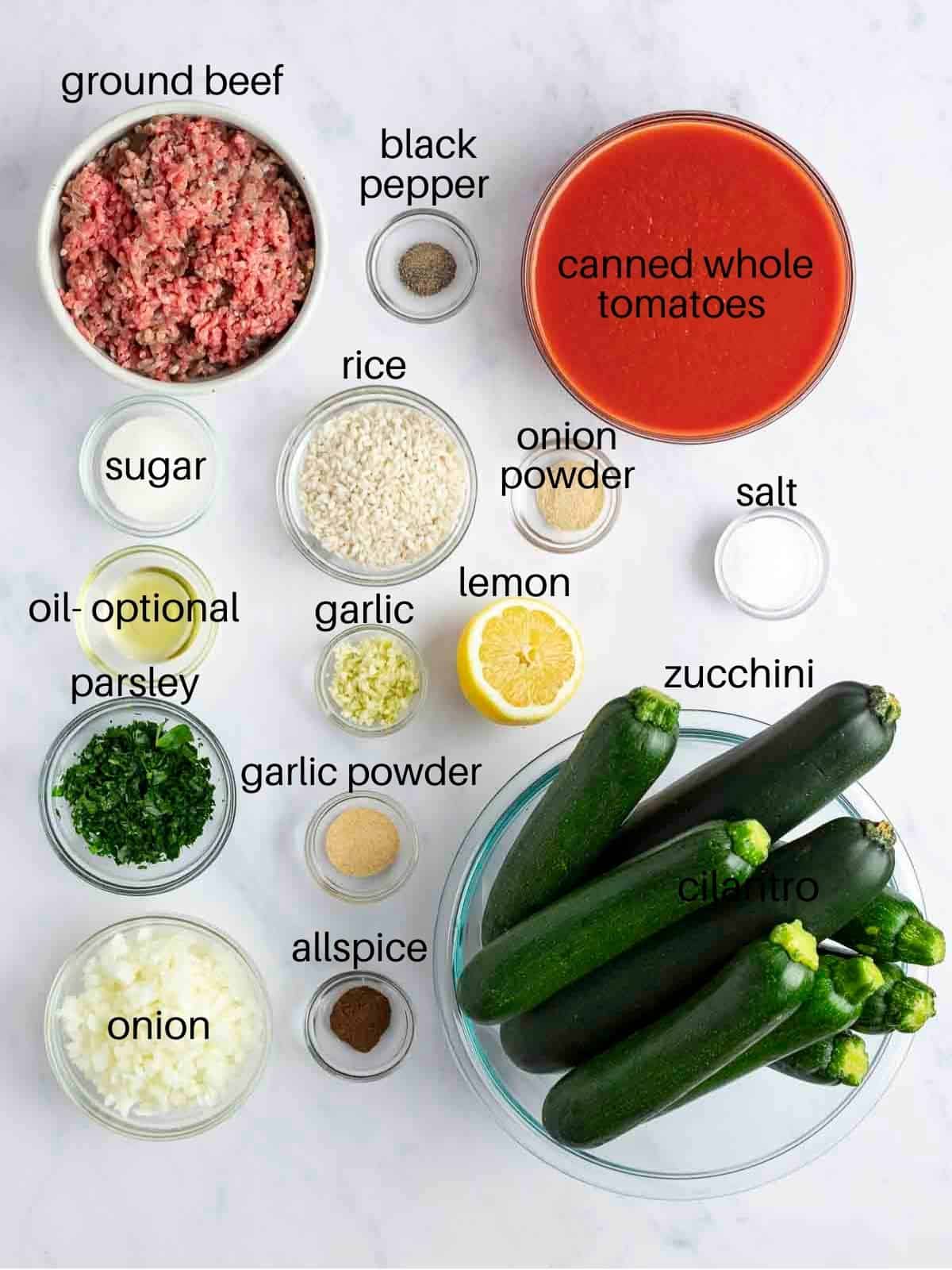
- Zucchini - This dish can be made with any type of zucchini, though it’s traditionally made with a small, light green variety from the Levant known as kousa, Middle Eastern summer squash, or Lebanese squash. It’s similar to a Mexican zucchini. Look for it in Middle Eastern markets and farmers’ markets. However, the dark green zucchini that is common in US supermarkets works as well.
- Canned tomatoes - I prefer using a 28-ounce can of Italian whole peeled tomatoes, as the highest quality tomatoes are typically reserved for canned whole tomatoes, making them less likely to taste bitter. I purée them with a hand blender for a smooth consistency. As an alternative, tomato passata offers good quality and comes already puréed, though it's usually sold in smaller 24 ounce jars. My third choice is two 15-ounce cans of tomato sauce.
- Lemon juice - Use fresh-squeezed as it’s an important part of the flavor profile, and fresh tastes much better than jarred.
- Sugar - This balances all the flavors, and the sauce might be bitter without it.
- Rice -I used Arborio rice as a nod to Angela’s Italian background, but any short-grain white rice works well. While opinions vary on using short versus long grain rice for this dish, I went with the advice of Claudia Roden in The New Book Of Middle Eastern Food, who recommends round (arborio) or short-grain rice for its stickiness, which helps bind the filling. However, if all you have on hand is long grain, that would be okay. The rice is not precooked, but a short soak helps it to cook more quickly and evenly. Do not use brown rice because it does not have enough time to cook completely.
- Beef - Ground beef is most commonly used in this dish, but ground dark turkey or lamb would work as well.
- Other ingredients include -Kosher salt, garlic powder, onion powder, allspice, black pepper, onion, garlic, and parsley.
This recipe has not been tested with substitutions or variations. If you replace or add any ingredients, please let us know how it turned out in the comments below.
How to Make Kousa Mahshi (step by step photos)
See the recipe card below for complete directions.
Use these process shots to help visual each step of the recipe.

Step 1. Soak the rice: Soak for 15-20 minutes, and then drain.

Step 2. How to core zucchini with a knife: Trim the ends of the zucchini. Hold the zucchini in one hand, and use a paring knife to cut a small square on one end. Insert the knife into the cut, and twist gently to connect the lines and core the zucchini.

Step 3. How to remove the core: Scoop out the zucchini center with a knife or small spoon, leaving a ¼” rim without piercing the skin.

Step 4. Mix the sauce: Combine the pureed tomatoes with the other sauce ingredients.
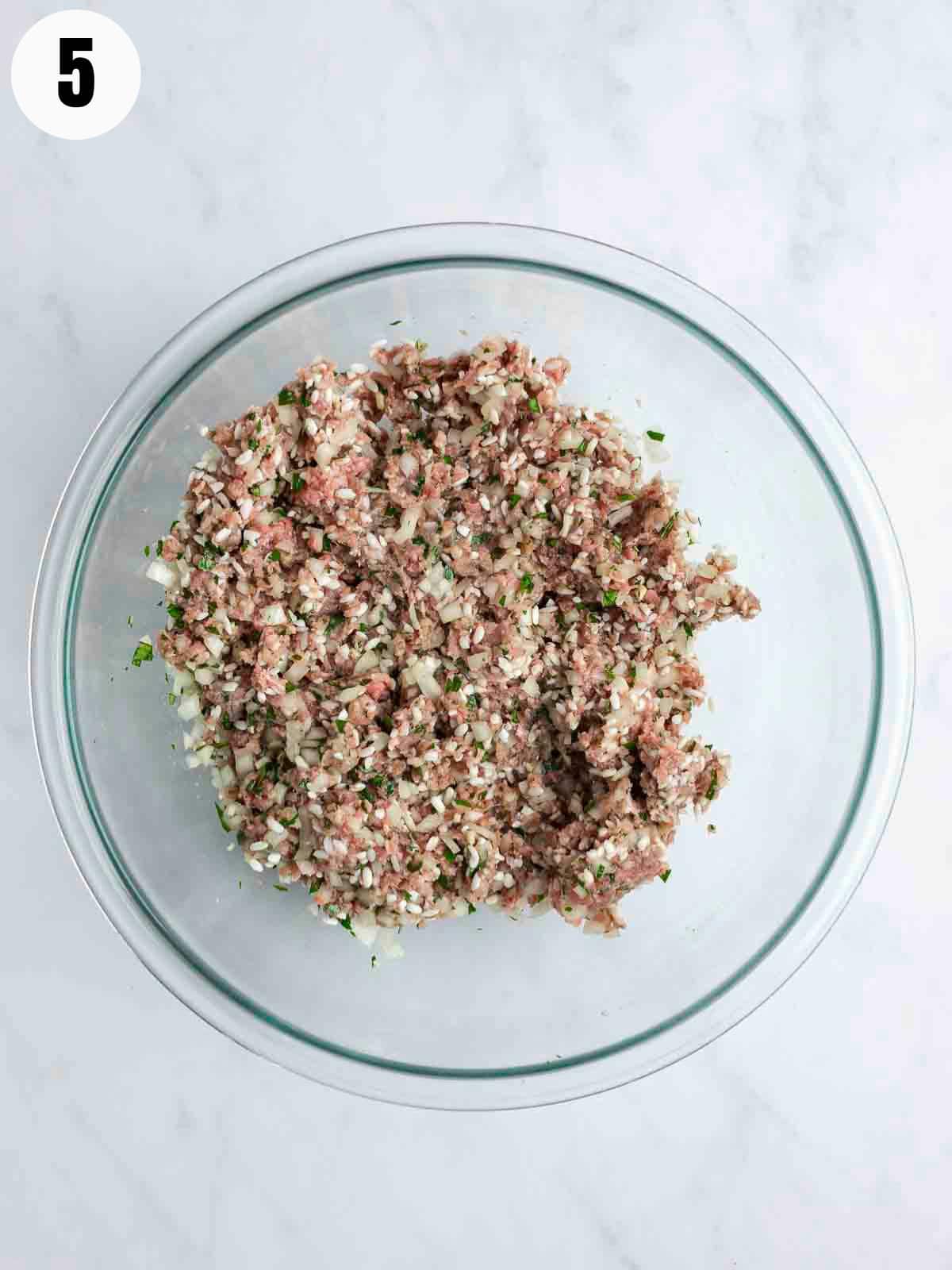
Step 5. Mix the meat filling and stuff the zucchini: Combine the drained rice with the meat filling ingredients. Stuff the zucchini, but do not pack tightly.

Step 6. Add the zucchini: Place the cored zucchini into the tomato sauce.

Step 7. Add the stuffed zucchini: Add the stuffed zucchini to the pot.
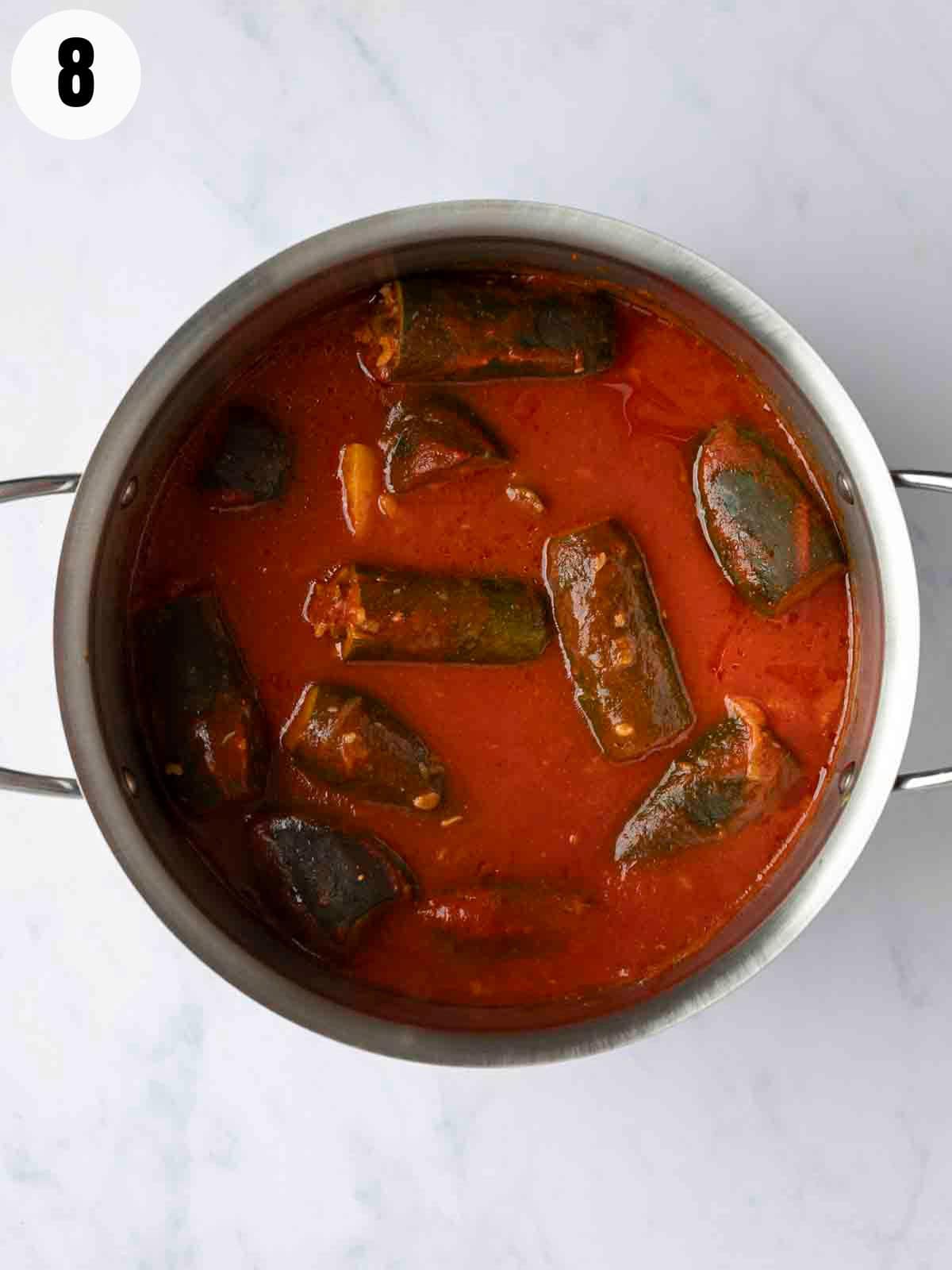
Step 8. Cook the zucchini: Pictured is what the dish looks like when finished cooking.
Top Tips
- If you use lean ground beef, add 1 tablespoon avocado or olive oil to add moisture to the mix.
- Cut long zucchini in half or thirds, to make them easier to core and stuff.
- Add the cored zucchini pieces to the pot to add more body to the tomato sauce. Leave them out if you prefer a thinner and smoother broth.
- If you like more of a peppery sauce, double the pepper in the sauce to ½ teaspoon.
- If you have extra filling, make small meatballs out of it, and add them to the pot to cook along with the stuffed zucchini.
- If you're not sure how long to cook the dish, err on the side of cooking longer.
- If you have leftover cooked broth, use it as a soup base.
Make Ahead and Storage
Make ahead: Transfer the cooked stuffed zucchini to a 9 x 13" baking pan in an even layer so it's easy to reheat. Top with sauce. Once cooled, store covered in the refrigerator for up to 3 days.
How to reheat: Bring the dish to room temperature by placing the covered pan on the counter for about 1 hour. Uncover, and reheat in a 350°F oven for 30 minutes or until bubbly and heated through. Place a rimmed baking sheet under the pan to catch any sauce that may overflow.
Can Kousa Mahshi be frozen?
This is controversial as some people feel that this dish can be frozen while others feel that the zucchini changes texture and gets mushy after being frozen. I would give it a try to see how it works for you.
How to freeze: Freeze in a 9x13” pan wrapped in plastic wrap and placed in a 2-gallon Ziplock bag. Defrost overnight in the refrigerator before serving. Reheat following the above directions.
Other Middle Eastern Recipes You'll Love
Looking for more Middle Eastern main dishes? Try one of these popular entrees:



Frequently Asked Questions
No, the rice is soaked beforehand, but it is not cooked, and neither is the meat. They will cook while in the sauce.
There’s a range of spices used depending on region and even family. This recipe uses allspice. Other recipes may include cinnamon, 7 spice, dried mint, cumin, or paprika.
I usually chop the insides and add some or all of it to the tomato sauce which thickens it. Otherwise, the squash pieces can be used in omelettes, soups, or stews.
The meat and rice version, such as this one, is served hot. A rice-only version can be served at room temperature.
It’s a one-pot, complete meal on its own, so it’s not necessary to add more. But it can be served with something light and fresh like a salad, such as Israeli salad. And pita or laffa flatbread can be served to dip into the brothy sauce.

Linger at Dana's Table a little longer for more free recipes.
Subscribe to my newsletter, and follow along on Facebook, Instagram, and Pinterest for the latest updates.
Recipe

Kousa Mahshi (Stuffed Zucchini with meat and rice)
Ingredients
- 5 pounds medium zucchini about 7 to 8 zucchinis depending on their size. See notes for type of zucchini.
For the sauce
- 1 (28-ounce) can whole peeled Italian tomatoes, puréed with a hand blender See notes for alternatives.
- 2 cups water
- 2 tablespoons lemon juice
- 2 tablespoons granulated white sugar
- 1-½ teaspoons Diamond Crystal kosher salt
- 1 teaspoon garlic powder
- 1 teaspoon onion powder
- ½ teaspoon allspice
- ¼ teaspoon freshly cracked black pepper
For the filling
- ½ cup Italian Arborio rice or short-grain white rice
- 1 pound ground beef see note
- 1 medium onion very small dice
- 2 cloves garlic minced
- ¼ cup chopped parsley ½ ounce
- 2 teaspoons Diamond Crystal kosher salt
- ½ teaspoon ground allspice
- ¼ teaspoon freshly cracked black pepper
Instructions
- Soak rice: Place the rice (for the filling) into a large bowl, and cover with water to soak while preparing the rest of the recipe, about 15 to 20 minutes. Then drain.
- Core the zucchini: Just barely trim both ends of the zucchini. Cut each zucchini into halves or thirds, so that each section of zucchini is about 3-½ inches long. Create a cavity in the zucchini by using a small paring knife, apple corer, or vegetable corer, taking care not to pierce through the zucchini skin. Separately, set aside both the cored zucchini and the removed interiors.
- Mix the sauce: Place the canned tomatoes in a large bowl, and purée with a hand blender. Add the rest of the sauce ingredients, including water, lemon juice, sugar, salt, garlic powder, onion powder, allspice, and pepper. Stir to combine, and set aside.
- Mix the meat filling: Drain the rice, and return it to a large bowl. Add the remaining filling ingredients, including beef, onions, garlic, parsley, salt, allspice, and pepper. Mix by hand or large spoon until fully combined. Set aside.
- Stuff the zucchini: Stuff each cored zucchini piece with the meat and rice mixture. Do not over pack.
- Fill pot: In a large soup pot, add about 1 cup of the sauce and the cored zucchini insides (this will prevent the stuffed zucchinis from sticking to the bottom of the pot). Place the stuffed zucchini on top; it is ok if they are layered. Then, pour the remaining sauce on top of the zucchini. It’s ok if the sauce doesn’t fully cover all the zucchini.
- Cook: Cover pot of stuffed zucchini and bring to a boil over high heat. Immediately, reduce to low heat, and simmer for 1 hour and 15 minutes. Check the zucchini to see if it’s tender enough. If it is still too firm, cook for up to 30 more minutes, depending on the size and moisture content of the specific zucchini. Cook until zucchini is very soft, and filling is cooked through.
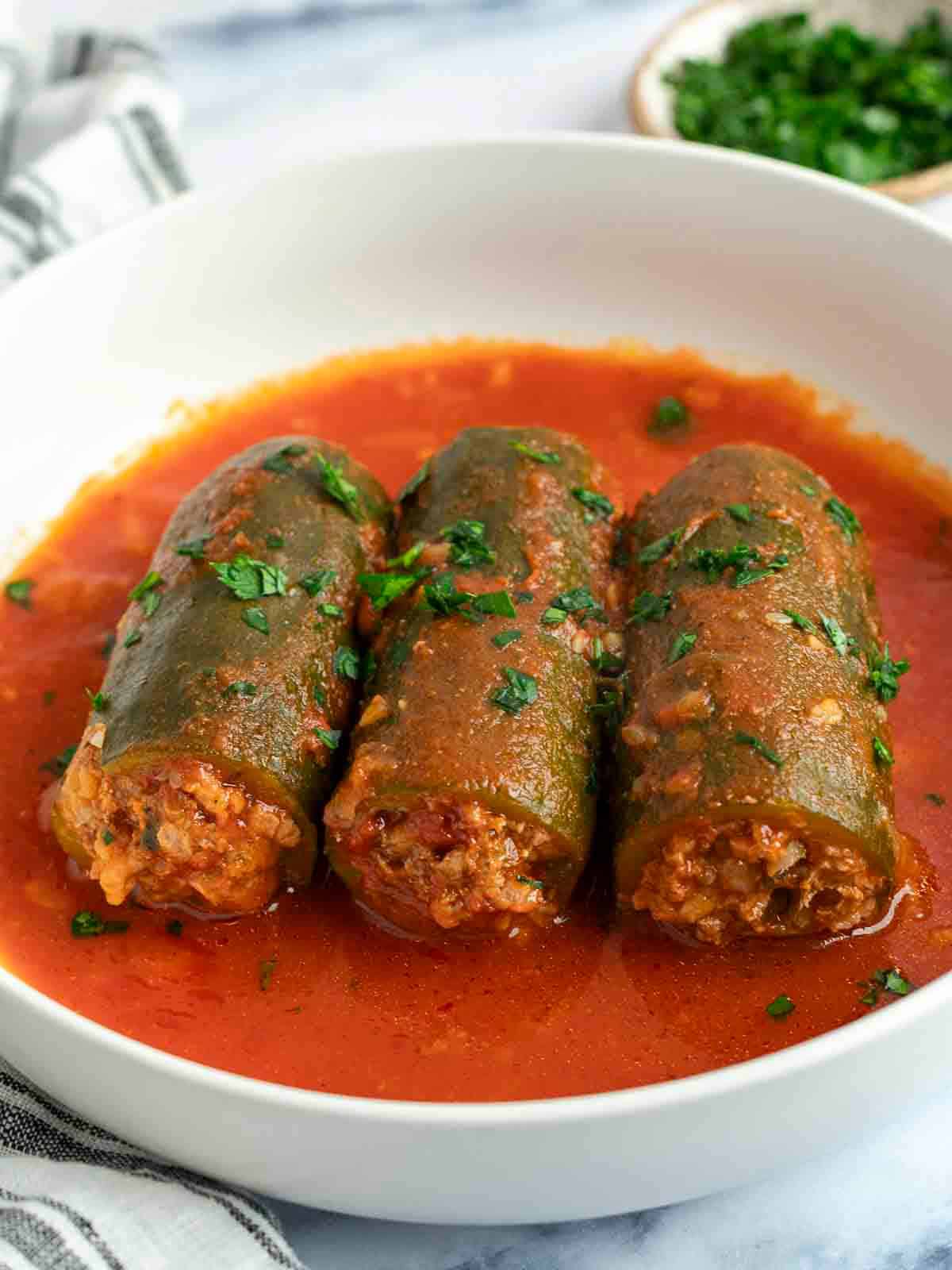
- Serve warm: Spoon a little brothy tomato sauce into individual shallow bowls, and add stuffed zucchini. Optional to serve with pita, laffa flatbread, or challah to soak up the extra sauce.
Notes
- Zucchini: This dish can be made with any type of zucchini, though it’s traditionally made with a small, light green variety from the Levant known as kousa, Middle Eastern summer squash, or Lebanese squash. It’s similar to a Mexican zucchini. Look for it in Middle Eastern markets and farmers’ markets. However, the dark green zucchini that is common in US supermarkets works as well. Canned tomatoes: I prefer using a hand blender to puree a 28-ounce can of Italian whole peeled tomatoes, as the highest quality tomatoes are typically reserved for canned whole tomatoes, making them less likely to be bitter. As an alternative, tomato passata offers good quality tomatoes and comes already puréed, though it's usually sold in smaller 24-ounce jars. My third choice is two (15-ounce) cans of tomato sauce.
- If you use lean ground beef, add 1 tablespoon avocado or olive oil to add moisture to the mix.
- Cut long zucchini in half or thirds, to make them easier to core and stuff.
- Make ahead: Transfer the cooked stuffed zucchini to a 9 x 13" baking pan in an even layer so it's easy to reheat. Top with sauce. Once cooled, store covered in the refrigerator for up to 3 days.
- How to reheat: Bring the dish to room temperature by placing the covered pan on the counter for about 1 hour. Uncover, and reheat in a 350°F oven for 30 minutes or until bubbly and heated through. Place a rimmed baking sheet under the pan to catch any overflow of the sauce.
- Can Kousa Mahshi be frozen? This is controversial, as some people feel that this dish can be frozen, while others feel that the zucchini changes texture and gets mushy after being frozen. I would give it a try to see how it works for you.
- How to freeze: Freeze in a 9 x 13” pan wrapped in plastic wrap and placed in a 2-gallon Ziplock bag. Defrost overnight in the refrigerator before serving. Reheat following the above directions.
Nutrition
Nutritional Disclaimer
Nutritional information is an estimation only.



Talia Alter says
Can I use equal parts quinoa instead of the rice?
Dana Shrager says
I wish I had the answer because this is a really good idea for Passover. I haven’t tried it, but I do know that the rice and quinoa cook for different amounts of time. I’d look online for kousa recipes with quinoa to see what kinds of adaptations that they make.
Dana says
This sounds great. Is there a good sub for the meat to make a vegetarian option? I guess a meat substitute could work, but maybe some hearty veggies? Thoughts?
Dana Shrager says
Hi- I’ve heard of several different options to make this dish vegetarian. I haven’t tried any of these myself, so please let use know if you try one of them and how it works out: 1) ground meat substitute as you mentioned. 2) All rice, so no meat and increase the amount of rice. I’m not sure if you need to increase the amount of water. 3) Pine nuts 4) Possibly cooked chickpeas, but I’m not sure if they would be mushy or just right by the time the rice and onions cooked through.
I know this can work well and will be delicious, but it might take a little tweaking and/or consulting other recipes that are already vegetarian.