
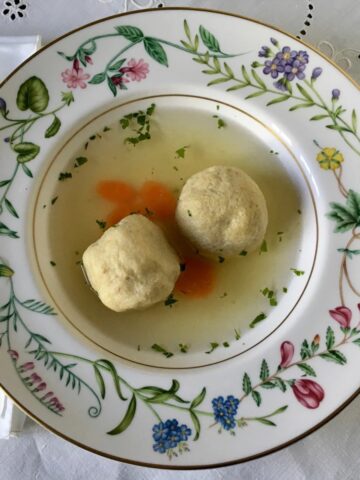
This homemade chicken broth is a key ingredient for making a delicious, classic matzo ball soup in addition to other soup varieties. Here I share my best tips and tricks from years of perfecting the tastiest chicken broth ever.
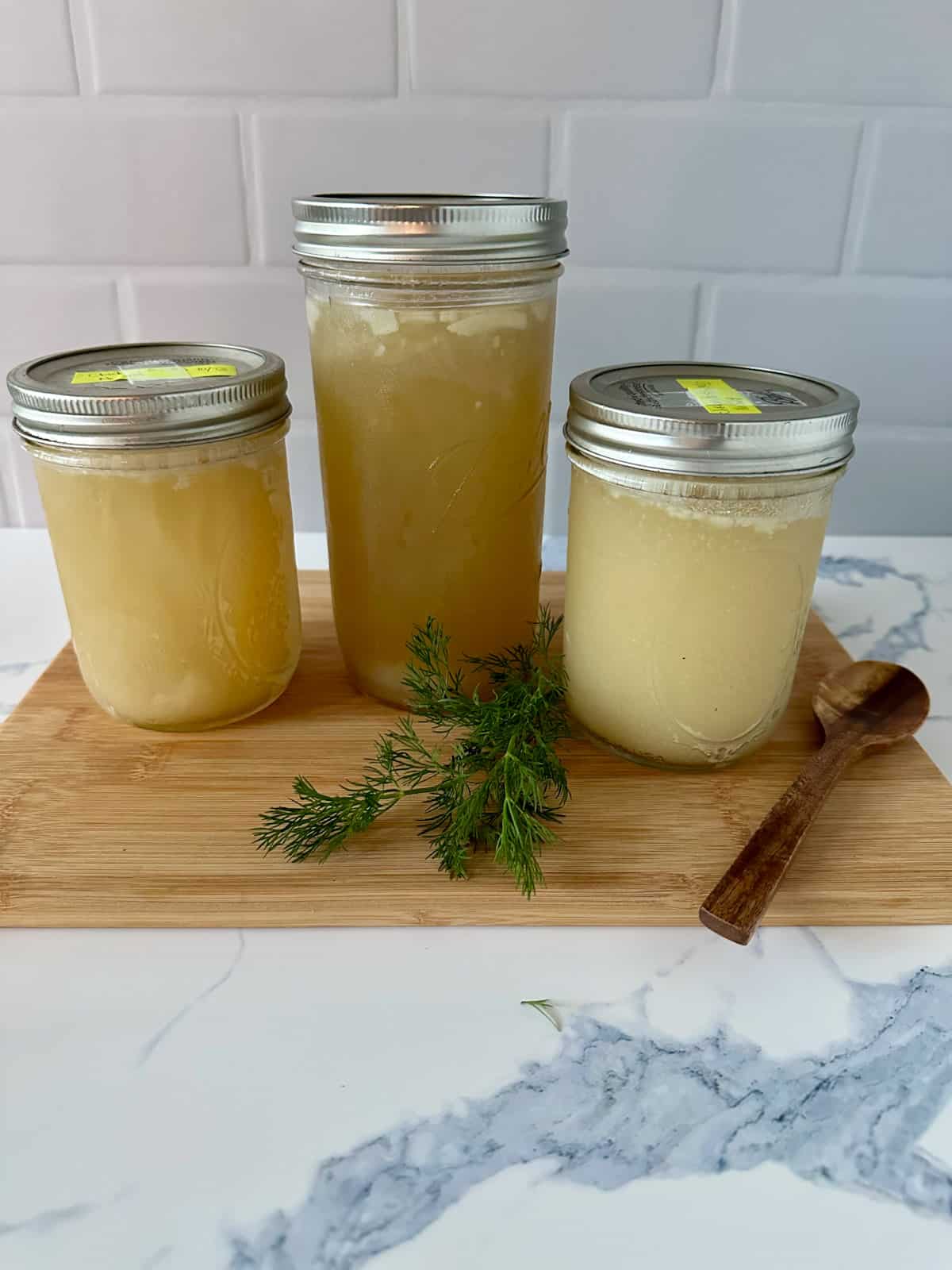
I make a big batch of chicken stock to have ready in the freezer to use for many dishes. First and foremost, homemade chicken broth is essential for a brothy soup like homemade matzo ball soup or chicken noodle soup where the broth is prominent.
If you make a blended soup like Parsnip and Apple Soup, Dairy Free Cauliflower Soup or Asparagus Soup, then you have the option to use a homemade stock if you have it, or you can use a store bought broth for convenience.
Chicken broth is also an important base to flavor sauces in dishes like Chicken Pad Thai with peanut sauce , Chicken Marbella, and Chinese Beef and Vegetable Stir Fry.
Jump to:
Why This Chicken Broth Recipe is The Best!
- Economical but FLAVORFUL! I use the most economical parts of the chicken that include a lot of skin and bones for the best chicken broth. These parts of the chicken are not only more affordable, but produce a broth full of richness, flavor, and body from the collagen.
- Tried and tested. This recipe has been handed down over generations in my family, and I have made tweaks along the way to make it even better. I’ve tested a range of different vegetables over the years, and I think the ones I’ve included are the most essential and give the most flavor.
- Unique vegetables. The flavor of the chicken stock is further enhanced with a unique combination of vegetables and herbs like parsley root, rutabaga, and white sweet potato. If you can get them, I recommend these less common vegetables because they add great flavor to the soup.
- Flexible recipe. I often don’t make this recipe the exact same way each time, and it still comes out delicious every time. It’s fine to adjust the vegetables to what you have on hand, or to what is available at your local store.
- Healing and comforting. Lore says that chicken soup has magical healing powers. It's nicknamed "Jewish penicillin," meaning that it's believed to help cure colds and flus. It's definitely warm and comforting.
Dana’s note: My grandmother taught me how to make this chicken broth. I still use many of her suggested ingredients and recipe tips to this day. I remember making Jewish chicken soup in her kitchen when I was a child, and she learned how to make it from her mother. It’s special that these simple family recipes have been passed down the generations by watching, learning, and making them together.
Ingredient Notes and Substitutions
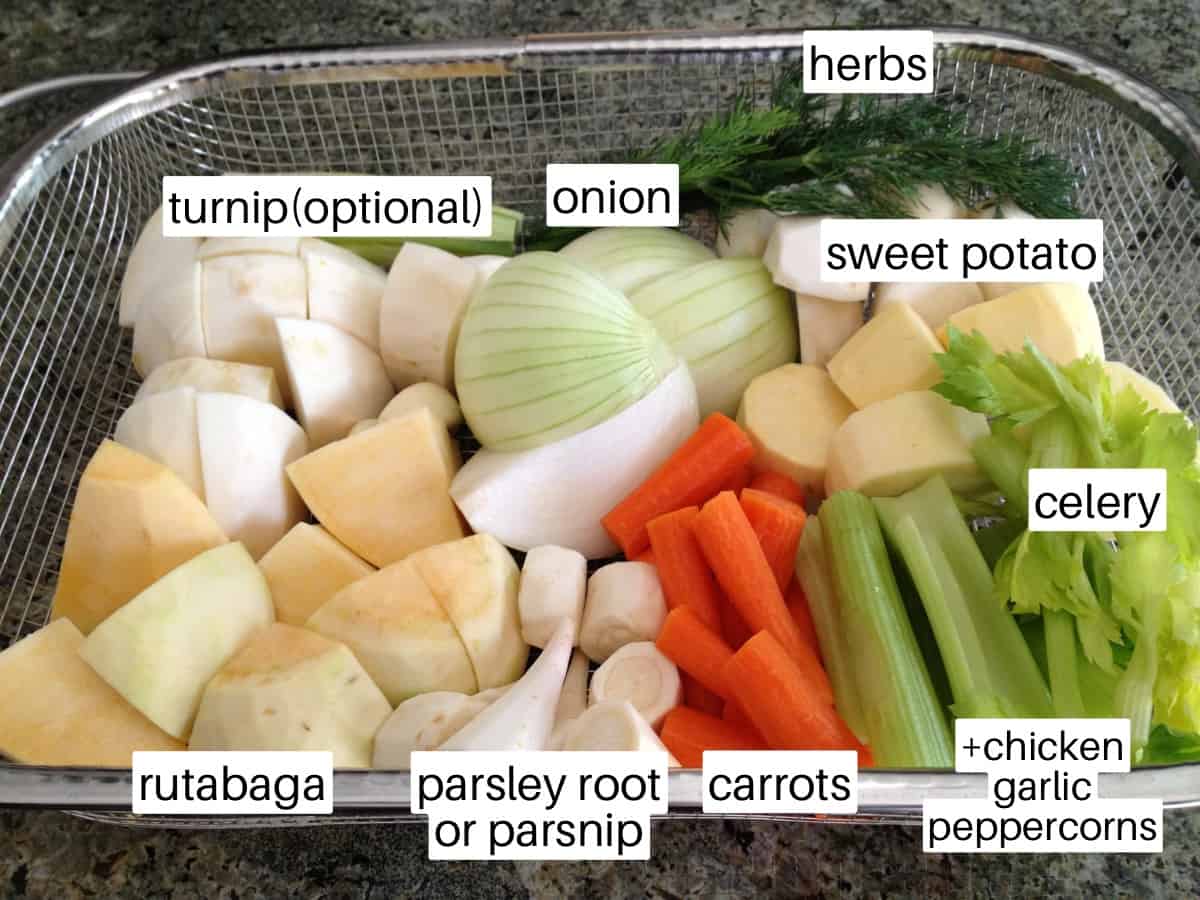
See the recipe card below for a complete ingredient list and measurements.
Chicken - When making chicken soup, you want to get the most flavor in the broth as possible. I use a variety of chicken parts for this chicken broth recipe including chicken necks and back bones. Using the bones, skin, and connective tissue leads to a more flavorful chicken stock that's rich in collagen. Chicken backbones and necks are usually economical to buy. If you don’t see them in the meat case, ask the butcher if any are available. In addition, I use bone-in chicken breast so the meat can be used later in matzo ball soup.
Other alternatives include chicken wings and legs, which are also high in collagen. Using a whole chicken cut up into parts works as well.
Vegetables - Onion, carrot, celery, parsley root or parsnip, and rutabaga or white sweet potato are my suggested vegetables, but it’s fine to vary or omit depending on what you have on hand or what is available at the market.
The white sweet potato adds a slight sweetness and golden color to the soup, which is really nice. Just make sure not boil the potato for more than an hour because it will start to fall apart and cloud the broth.
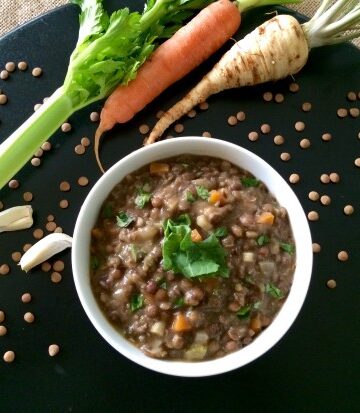
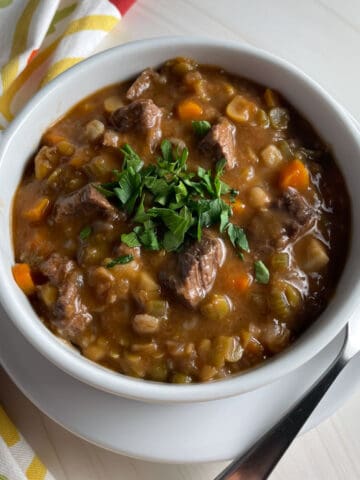
Parsley root adds such a pleasant and herbaceous taste. It’s a root in the parsley family that is grown for its root more than the greenery. Parsley root is white and about the size and shape of a carrot. It’s not always in the market, but when I find it, I get it because it lasts for months in the vegetable bin of the refrigerator. It’s a fabulous addition to soups and stews like Lentil and Carrot Soup and Beef Barley Vegetable Soup. I substitute with parsnip when I can't get parsley root.
Herbs - Herbs add another layer of flavor that really adds to the soup. Dill and parsley are classic choices. Or a small amount of thyme is nice as well. One or two dried bay leaves are a good substitute if you don’t have fresh herbs.
How to Make Homemade Chicken Broth like Grandma
See the recipe card below for complete directions.
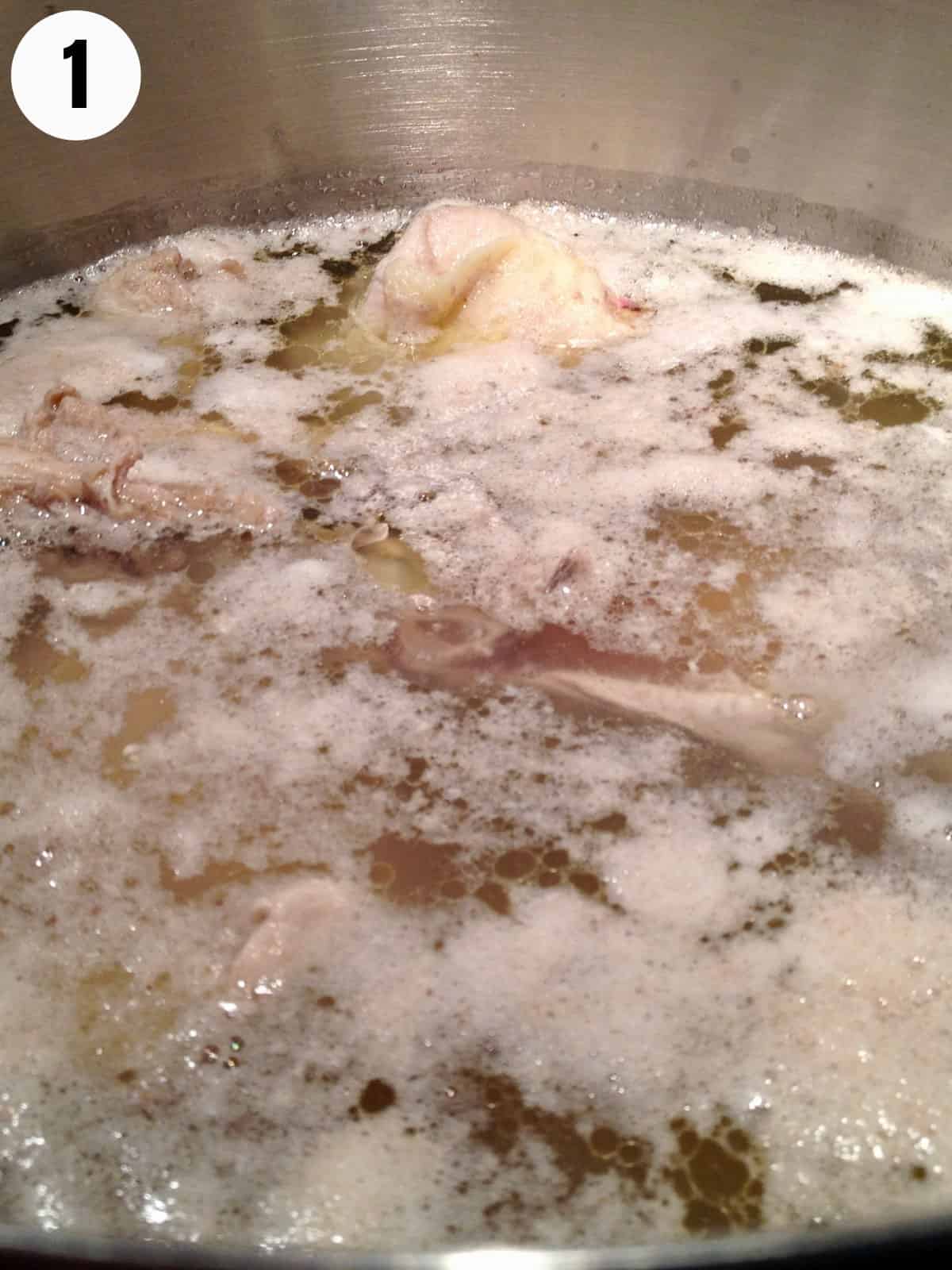
Step 1: Start with just the chicken and water. Add chicken to a large pot and cover with water. Bring to a boil, then reduce heat to a simmer for about 30 minutes, until the chicken breast is cooked through. Skim off any foam that rises to the surface. Remove the chicken breasts, and cut into small pieces. Store in the refrigerator for Matzo Ball Soup or other use.
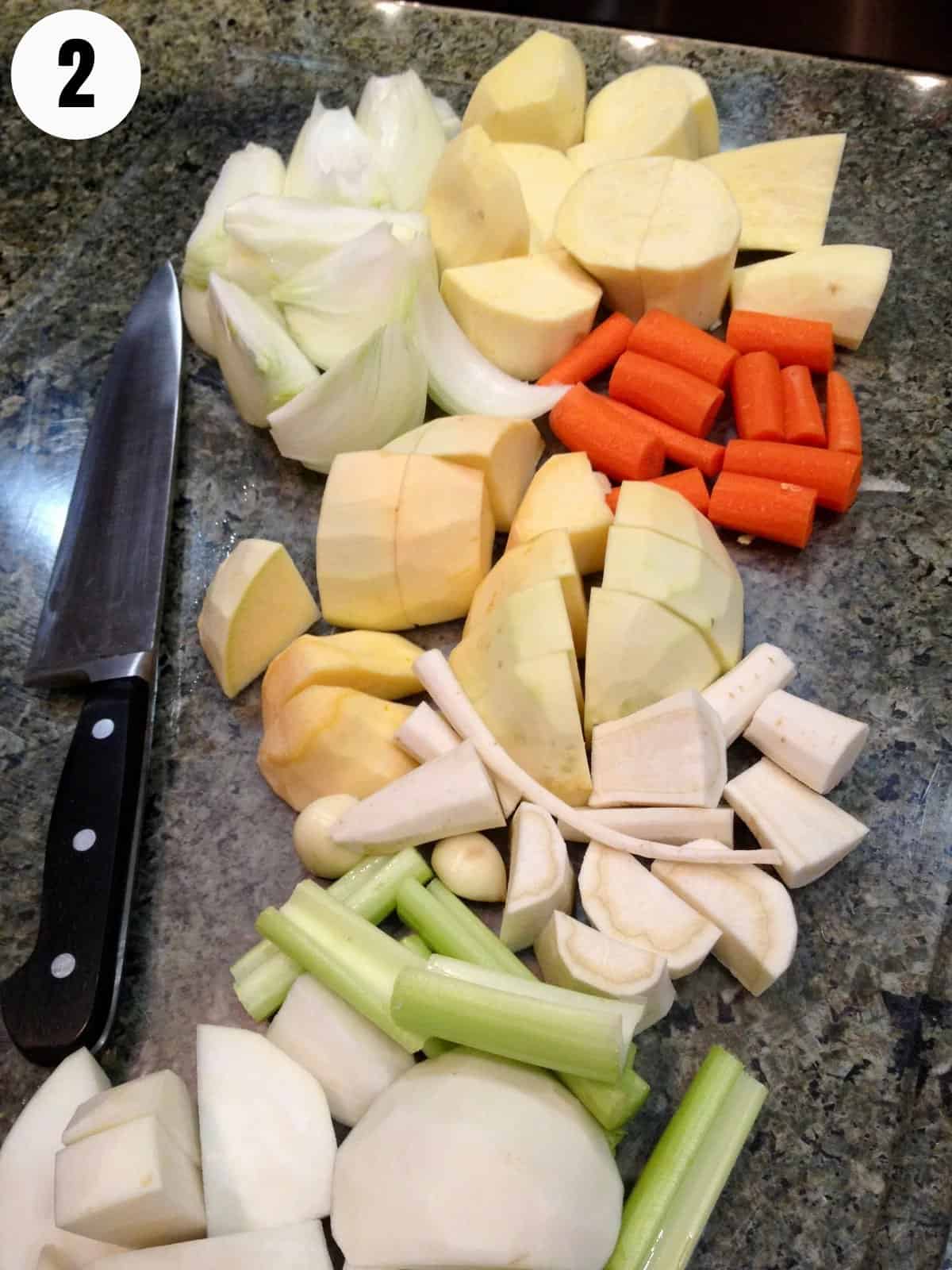
Step 2: Prep vegetables: In the meantime, chop the vegetables into large chunks.
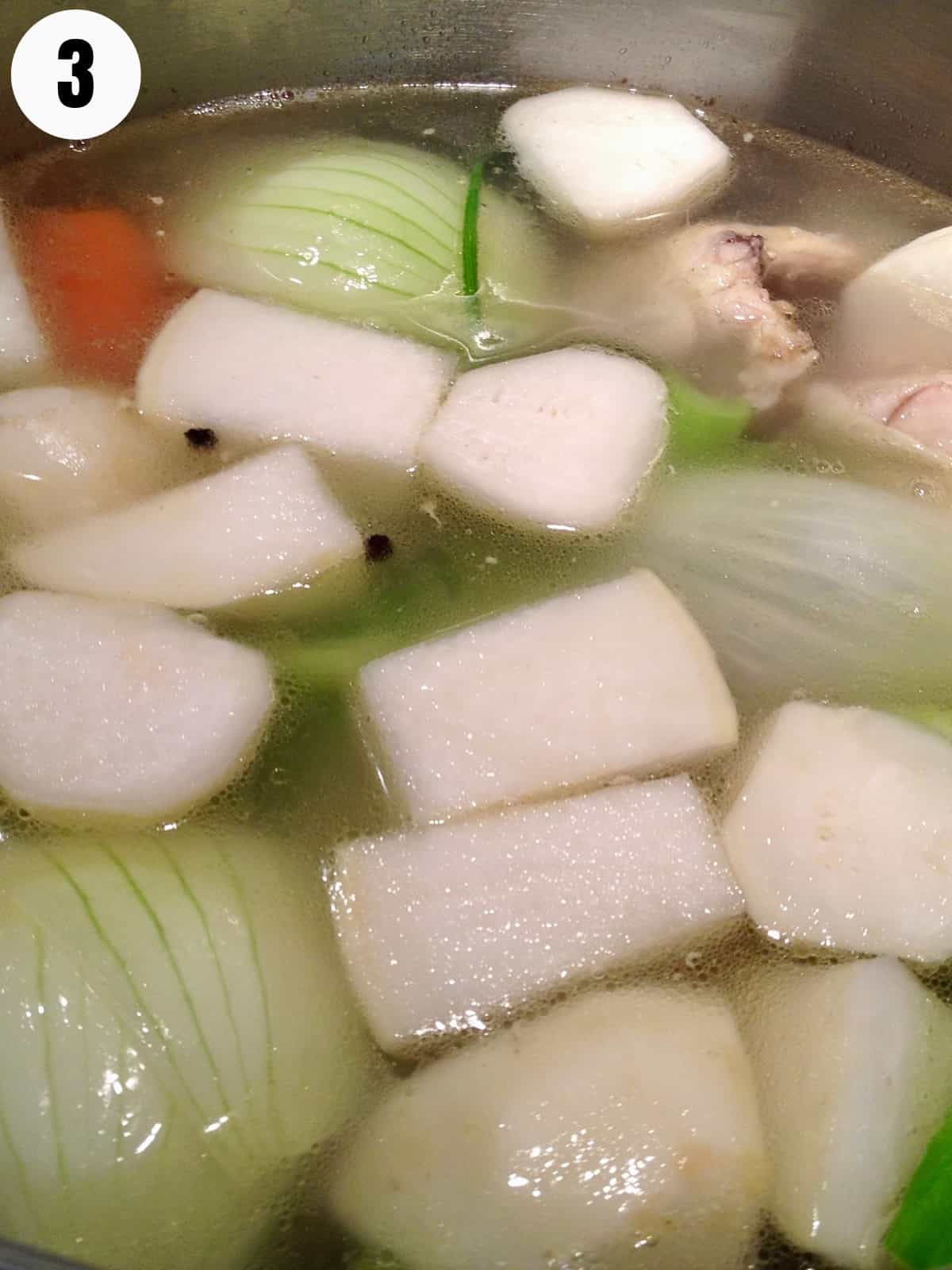
Step 3: Add veggies to pot. Add vegetables into the pot, and add enough water to cover by 1-2 inches. Bring to a boil, reduce to a simmer, then cook with cover ajar for another hour. Once the vegetables are soft, strain the broth, then discard the remaining chicken pieces and vegetables.
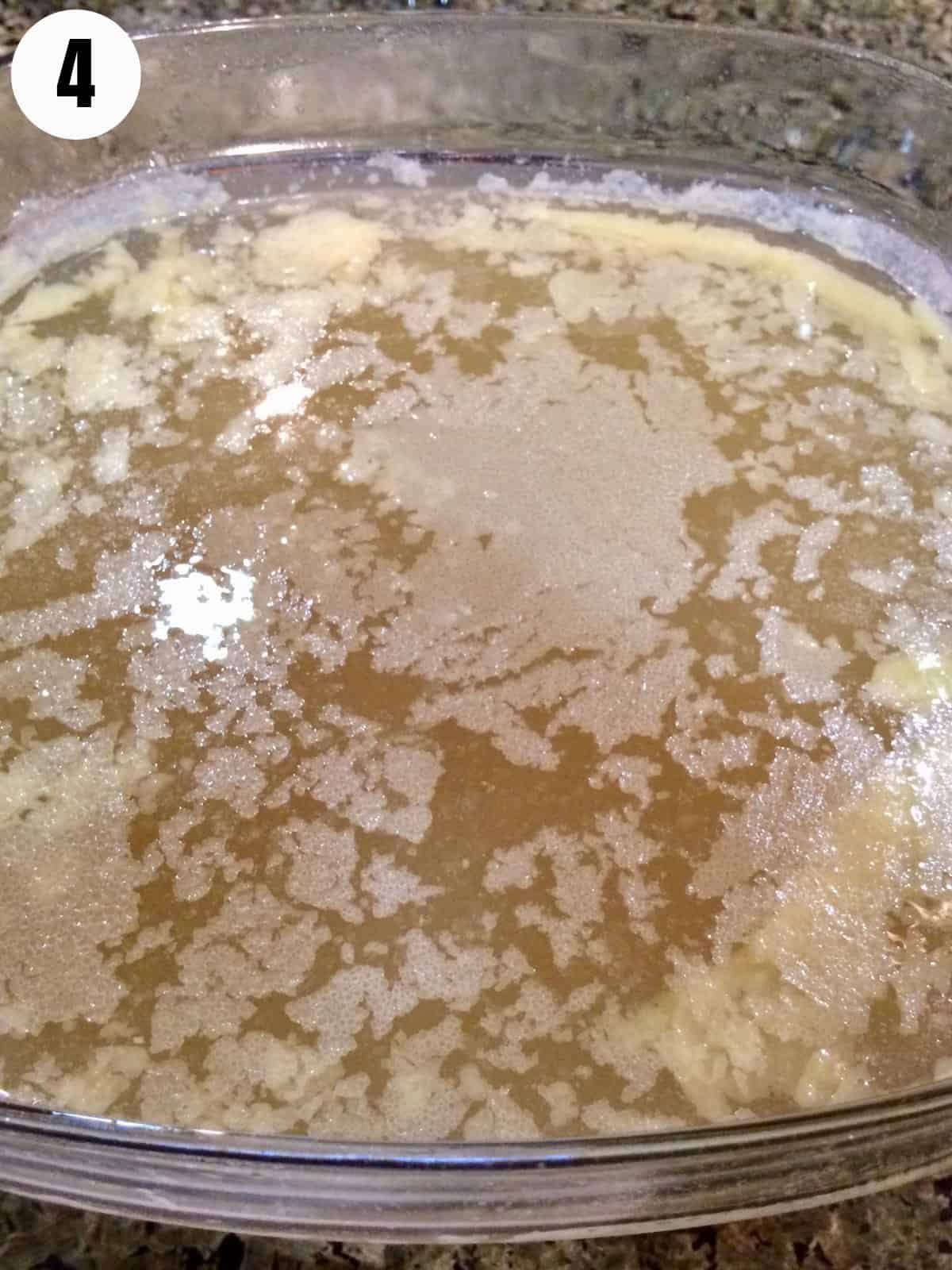
Step 4: Remove fat. Let the broth cool slightly, then store in the refrigerator overnight. The next day, the fat will congeal at the top of the soup. You should be able to easily pick it off to discard.
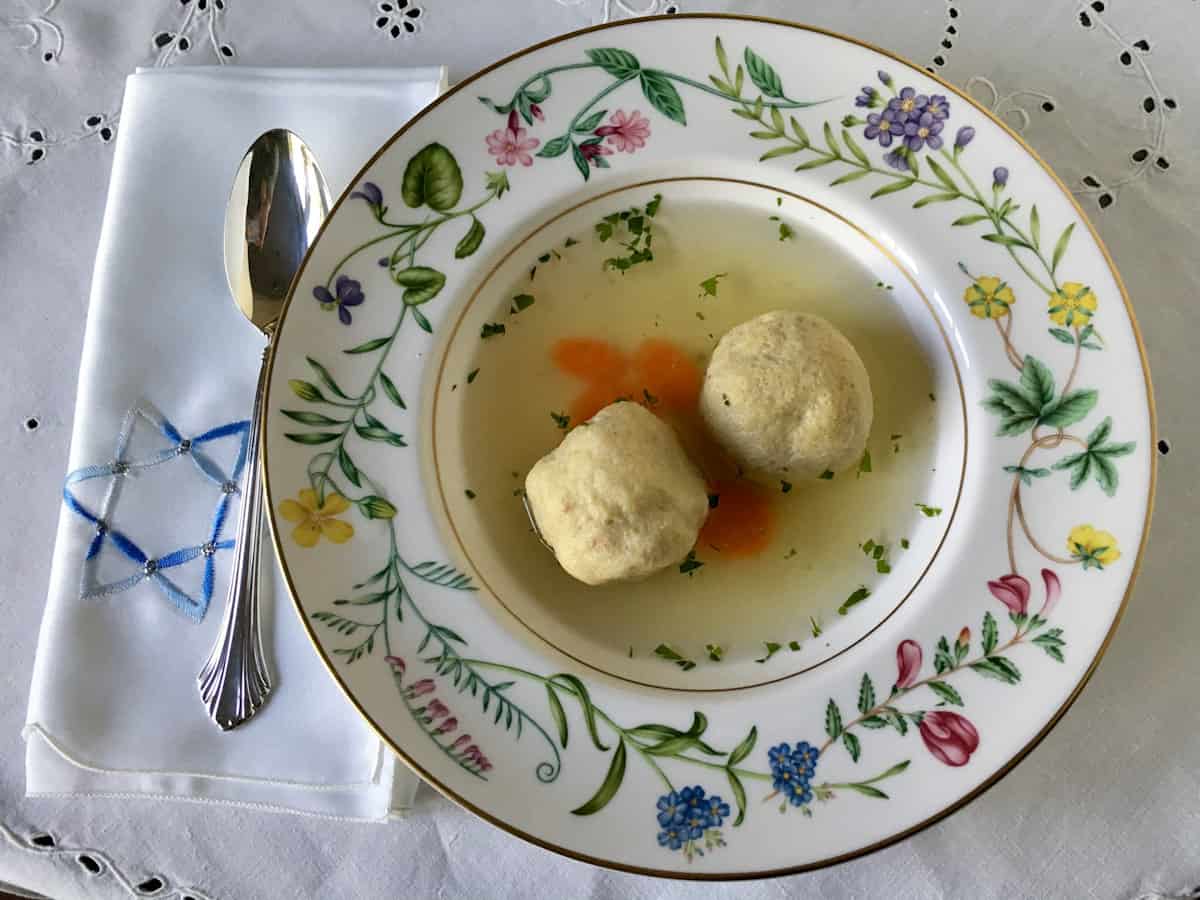
Use this homemade chicken broth for making tasty soups and other dishes.
Top Tips for Homemade Chicken Broth
Here are my pro tips developed from years of experience. I’ve made all the errors, so you don’t have to!
- Don’t overcook the vegetables or else the broth gets more cloudy. The rutabaga and sweet potato can cook for about an hour before they begin to fall apart. The other vegetables can cook for at least an hour and a half, maybe two.
- Easily remove fat from the bone broth by refrigerating overnight. The fat rises to the top and solidifies, making it easy to remove with a fork. Do not throw the excess fat down your kitchen sink as it can narrow or clog your pipes. Some people like to save the fat to use as schmaltz for cooking. To throw away, I prefer to put it in a disposable container which I saved from something else like a yogurt container.
- If your broth tastes too weak and flavorless, boil it down so that the flavors will intensify.
- The broth won’t taste fully flavorful until you salt it. I recommend Diamond Crystal kosher salt or sea salt for a clean and pleasant salt taste. Iodized salt tastes metallic. Wait to salt the broth until you are done boiling or reducing the broth. If you salt too early, you will end up with a broth that is too salty after it reduces.
- The more vegetables and chicken you pack into your soup pot, the more flavorful your broth will be.
- For clear broth, double strain it. Use a finer strainer for the second strain. Strain your soup from one pot to another through a strainer. Use oven mitts because the pot is hot. Do this in the sink in case you spill or splash.
- I like to make a big batch in my largest stock pot at the beginning of the fall and winter seasons to use later in different recipes. Freeze in different sized freezer-safe containers so you have homemade broth for future recipes. I especially use this recipe to make the best homemade matzo ball soup.
Storage and Make Ahead
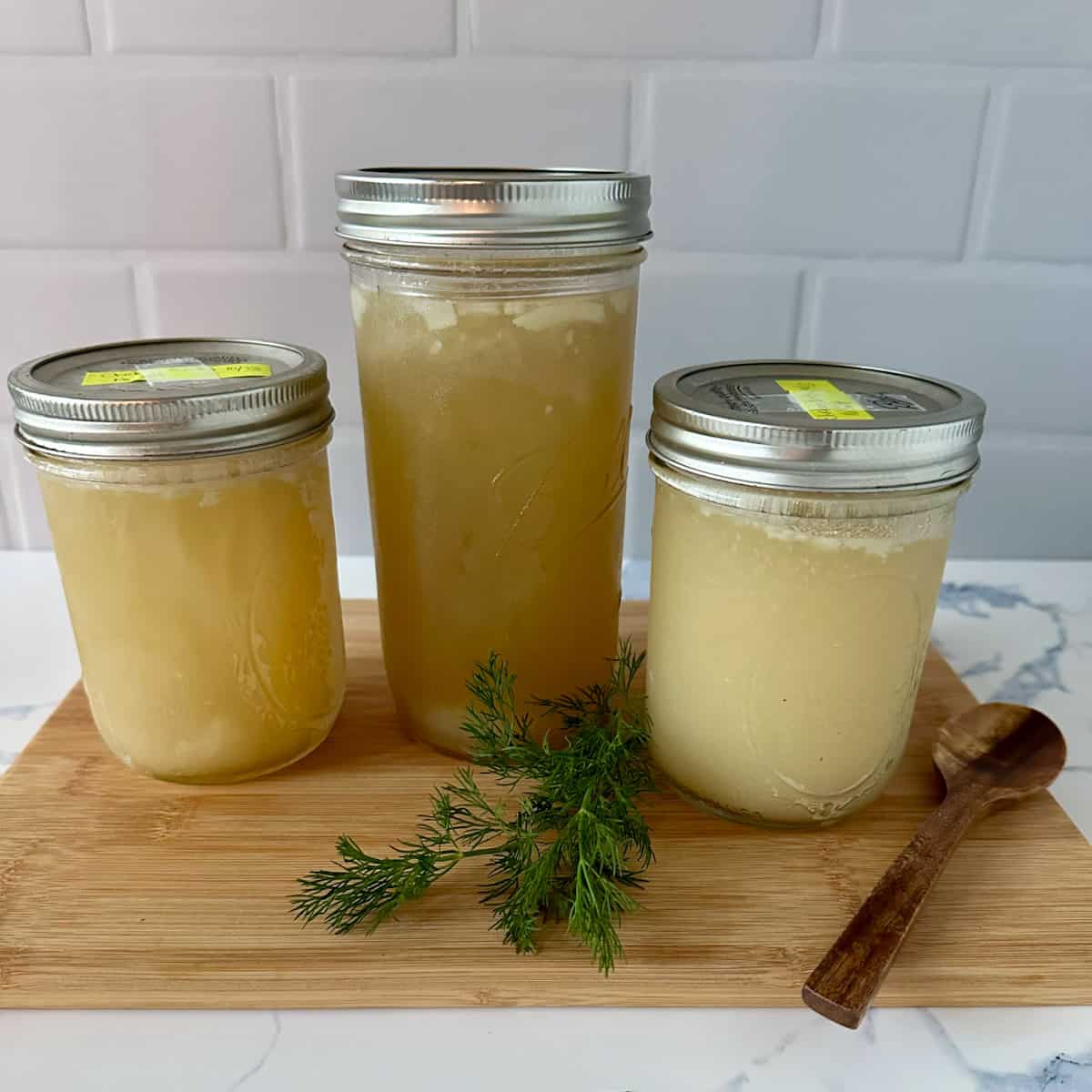
How to store: Cool, cover, and store chicken broth in the refrigerator for about 3 days.
How to freeze: Store for about 6 months to a year in the freezer. When freezing, take care to not fill to the top because the liquid broth will expand when it turns into a frozen state. Likewise, only use straight sided containers; if the container has a narrowing neck, the glass can break as the frozen liquid expands. For smaller portions, freeze in ice cube trays.
How to reheat: Reheat in the microwave or on the stovetop until hot. Be sure to cover so that liquid does not evaporate.
Make ahead: This is a great recipe to make ahead of time. Store in the freezer in smaller portions and amounts that are useful for your recipes.
Frequently Asked Questions
The best parts of the chicken for making your own chicken broth are ones that are high in collagen. Use chicken pieces that have bones, especially neck, backbone, and wings. Bone in legs and thighs are good too. You can use some chicken meat, but bones make the best stock.
Chicken stock turning to a jelly-like consistency is actually a good sign! That's a sign that the broth has a lot of collagen in it, which is good for flavor and consistency. The stock will liquify once heated, so it’s not a problem for the stock to be gelatinous when cold.
There are several uses for the cooked chicken after you make the stock. I like to use a couple breasts and take them out early when they are just cooked so that they stay moist. For the rest of the chicken, I like to use parts with lots of bones and not a lot of meat like necks, backs, wings, and legs. When using these pieces, there won't be a lot of meat left over, and I discard. If you have a significant amount of chicken meat and want to make a dish with it, use it in something that has a sauce so the chicken is moistened. Try dishes like chicken salad, chicken pot pie, pulled BBQ chicken, chicken enchiladas, chicken kreplach, chicken bourekas, or chicken knishes.
No, adding any additional chicken flavoring is not necessary. This broth has a natural taste to it, and adding any of those products adds an artificial taste. Those products have MSG or hydrolyzed yeast extract added to them which gives an intensified flavor that doesn’t taste natural. If your broth needs more flavor, I would either boil it down a little or add a little salt, pepper, and chopped herbs to the broth. If you stop using those products, your taste buds adjust over time, and then you no longer feel like you need them.
Generally, broths are made from the flesh, and stocks are made from bones. Chicken bone broth is actually the same as chicken stock, but bone broth has become a buzzword in recent years. Nevertheless, these three terms are often used interchangeably in recipes
Linger at Dana's Table a little longer for more free recipes.
Subscribe to my newsletter, and follow along on Facebook, Instagram, and Pinterest for the latest updates.
Recipe
Chicken Broth Recipe
Equipment
- Stock pot
- Large strainer or colander
Ingredients
- 5 pounds chicken and chicken bones 2 breasts, plus any combination of back, neck, wings, legs
- 12 cups water or just enough to cover the chicken and vegetables in the pot before cooking
- 1 large onion peeled and quartered
- 2 medium carrots peeled and cut into large chunks
- 2 celery ribs cut in large chunks
- 2 parsley roots or 1 parsnip optional, peeled and cut into large chunks
- 1 rutabaga optional, quartered, or substitute with white sweet potato or turnip
- 2 cloves garlic peeled and halved
- 5 peppercorns
- 4 sprigs fresh parsley
- 2 sprigs fresh dill
- Diamond Crystal kosher salt and freshly cracked black pepper to taste
Instructions
- Start with chicken and water: In a large soup pot on the stove, add chicken and cover with room temperature water plus 4 inches. Bring to a boil over high heat, then reduce to a good simmer for 20-30 minutes uncovered until chicken is just cooked through. Skim off any scum that comes to the surface and discard. Take out breasts and set aside.
- Cut the breast meat into bite-sized pieces. Season to taste with kosher salt and freshly cracked pepper. Put a couple large spoonfuls of broth over the chicken pieces to keep them moist. Store the chicken in the fridge to use for another recipe or in matzo ball soup. Return the remaining skin and bones to the pot.
- Add in all vegetables and herbs. Add more water to cover by about one inch. Bring to a boil on high heat with the lid slightly ajar, then reduce to a simmer. Cook for 1 to 1-½ hours more. Take out and discard sweet potato or rutabaga at the one hour point before it falls apart.
- Strain and season: When the vegetables are very soft, strain the broth with a large colander into a large container. I strain a second time with a fine mesh strainer to get the broth as clear as possible. Discard the vegetables and remaining chicken pieces. Season the broth to taste with salt and pepper.
- Cool and refrigerate: Let the soup cool a bit, then ideally refrigerate it overnight so the fat congeals to the top.
- Remove fat: The next day, lift the fat off with a fork, and discard or use as schmaltz. If you don’t have time to wait, skim off the floating liquid fat from the surface with a spoon. Broth is ready to use in soups or other dishes.
Notes
- This is a flexible recipe, and you can adjust the chicken parts or specific vegetables and herbs to what is available to you. See guidance in blog post.
- Don’t cook in too much water or else your broth will taste weak. Only use enough water to just cover the chicken and vegetables.
-
Don’t overcook the vegetables or else the broth gets more cloudy. The rutabaga and sweet potato can cook for about an hour before they begin to fall apart. The other vegetables can cook for at least an hour and a half, maybe two.
- The broth won’t taste fully flavorful until you salt it. I recommend Diamond Crystal kosher salt or sea salt for a clean and pleasant salt taste. Iodized salt tastes metallic.
- If you don’t have use for the removed chicken fat, then dispose in the trash. Do not put fat down your kitchen sink or else you may clog your pipes.
- I find that after cooking, the vegetables and chicken (besides the breast pieces) have given their nutrition into the broth and that there’s not much life left in them. Some people like to give the chicken meat to their dog or use the chicken and vegetables in another dish like pot pie or kreplach. It’s up to you.
- The broth can be stored covered in the refrigerator for 3 days, or frozen for up to 6 months or more. Freeze the broth in container sizes that correspond to your intended use.
Nutrition
Nutritional Disclaimer
Nutritional information is an estimation only.

Comments
No Comments